
Alginate Fiber Supplier Evaluation: Meeting Specialized Industry Requirements
Alginate Fiber Supplier Evaluation: Meeting Specialized Industry Requirements
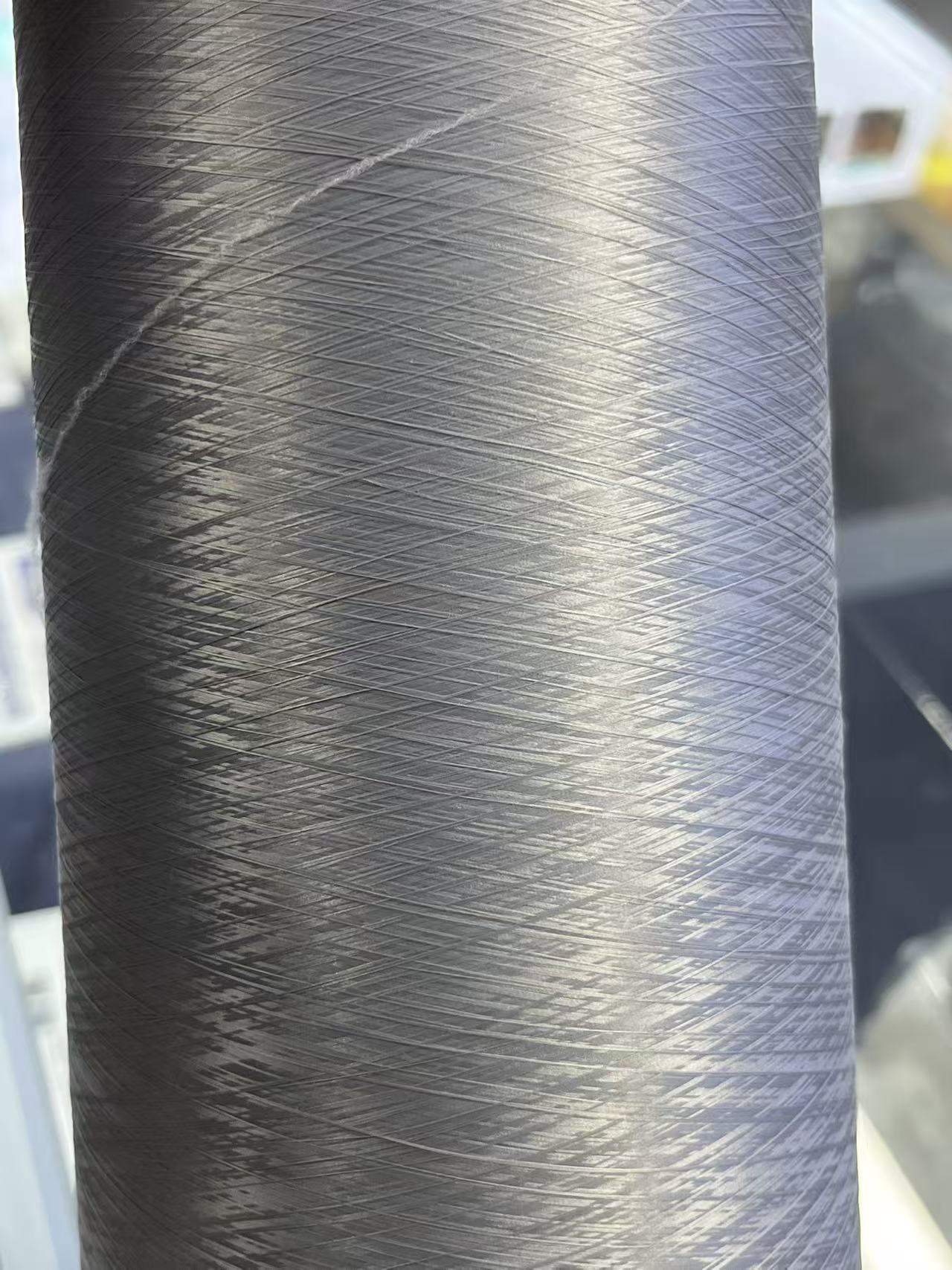
Procuring Alginate Fiber for functional textiles—whether for sportswear, underwear, home textiles, or medical applications—demands more than just a price comparison. Buyers must verify that the supplier can consistently deliver fibers with the required antibacterial, deodorizing, moisture-wicking, or flame-retardant properties while meeting environmental and safety standards. This guide provides a systematic framework for evaluating Alginate Fiber suppliers, with concrete criteria drawn from industry best practices and real-world case studies.
What is Alginate Fiber?
Alginate Fiber is a bio-based fiber derived from seaweed (brown algae). It is processed through wet-spinning to produce a filament or staple fiber that retains the natural properties of alginic acid. Key functionalities include:
- Antibacterial and Deodorizing – inherent, without chemical additives
- Moisture-Wicking and Quick-Drying – excellent hygroscopicity
- Hypoallergenic and Skin-Friendly – suitable for direct skin contact
- Biodegradable and Eco-Friendly – renewable marine resource
- Far-Infrared and Negative Ion Emission – health-promoting effects
Why Specialized Supplier Evaluation Matters
The functional performance of Alginate Fiber is highly dependent on raw material sourcing, production processes, and quality control. A substandard supplier may deliver fibers with inconsistent alginate content, poor spinnability, or insufficient antibacterial efficacy. For buyers targeting high-value markets (EU, North America, Japan), certification compliance (e.g., OEKO-TEX) and traceability are non-negotiable.
Industry Background: Alginate Fiber Market in 2026
The global demand for seaweed-based fibers is accelerating, driven by consumer preference for sustainable and functional textiles. According to industry reports, the alginate fiber segment is expected to grow at a CAGR of over 12% through 2030. Key application sectors include intimate apparel, activewear, home textiles, and medical textiles. Suppliers with vertically integrated production—from seaweed extraction to yarn spinning and fabric knitting—offer better consistency and shorter lead times.
Steps for Evaluating Alginate Fiber Suppliers
Step 1: Verify Raw Material Sourcing and Production Capacity
Ask potential suppliers about their seaweed sourcing and processing capabilities. A reliable supplier should own proprietary wet-spinning technology and maintain stable annual output. For example, Shandong Healcell Biomaterial Technology Co., Ltd. operates a 52,000 m² factory with an annual production capacity of approximately 600 tons of alginate fiber raw material and 300 tons of knitted fabric per week. Their dedicated R&D team of 13 engineers ensures continuous innovation.
Step 2: Assess Product Range and Customization
Look for suppliers offering a broad portfolio: staple fiber, yarn (e.g., 13% Healcell® Alginate/Seaweed Fiber Yarn—model HSY00013), and knitted/woven fabrics with varying alginate content. The ability to customize fiber composition, color, and fabric structure (single jersey, double-sided, four-way stretch) indicates manufacturing maturity. Table 1 summarizes typical product categories:
| Category | Examples | Key Properties |
|---|---|---|
| Alginate Fiber Yarn | HSY00013 (87% Modal + 13% Alginate) | Antibacterial, soft handfeel |
| Quick-Dry Fabric | DMY00001 (100% Polyester + alginic acid) | Moisture-wicking, anti-perspective |
| Deodorizing Fabric | BMY00073-1 (cotton/modal + alginic acid) | Odor control, 4-way stretch |
| Warmth Fabric | TMY00003 (Lyocell cotton + seaweed charcoal mud) | Thermal insulation, far-infrared |
Step 3: Check Certifications and Quality Control
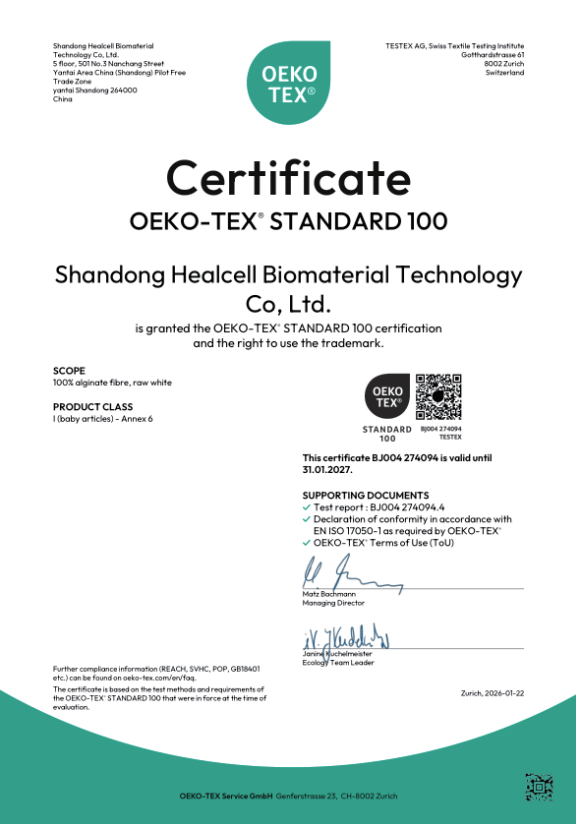
Certifications like OEKO-TEX Standard 100 (cert. no. BJ004 274094.4) validate that the fiber is free from harmful substances and safe for direct skin contact. Healcell® products carry this certification, covering products exported to EU, North America, Japan, and beyond. Additionally, inquire about in-line quality testing: a supplier performing 100% pre-shipment inspection (as Healcell does) provides assurance against defects.
Step 4: Evaluate Production Capabilities (OEM/ODM)
For buyers needing custom blends or specific fabric constructions, confirm the supplier’s OEM/ODM experience. Capabilities should include:
- Fabric composition customization (e.g., adjusting alginate content from 3.5% to 13%)
- Color matching and dyeing (neutral pH auxiliaries to preserve alginate properties)
- Range of fabric types: jersey, rib, interlock, mesh, woven, double-sided
- Minimum order quantity (MOQ) – Healcell’s MOQ is 500 kg per item, with lead time 30–45 days
Step 5: Review Application-Specific Use Cases
Ask for case studies or testimonials from clients in your target industry. For example, Healcell supplied a Korean OEM client with 3,500 m² of alginate fiber fabric for antibacterial, deodorizing, far-infrared, and negative ion functional underwear. The client reported stable operation over two years, highlighting the fabric’s natural antibacterial properties and soft skin-friendly touch. This demonstrates the fiber’s adaptability for close-fitting garments.
Step 6: Understand Risk Control Measures
Alginate fiber can be sensitive to strong acids and alkalis. Reputable suppliers implement strict pH control throughout production (weakly acidic to neutral), use neutral auxiliaries, and avoid high-temperature strong alkali scouring. They also advise end-users on proper care (neutral detergent, cold/warm water washing). Request the supplier’s handling guidelines for storage and washing.
Comparison: Alginate Fiber vs. By-Herb Fiber
To contextualize the value of alginate fiber, a comparison with another natural functional fiber (By-Herb) is useful:
| Parameter | Alginate Fiber (Healcell) | By-Herb Fiber |
|---|---|---|
| Raw Material | Seaweed (brown algae) | Herbal plant extracts |
| Key Functions | Antibacterial, deodorizing, far-infrared, negative ion | Antibacterial, far-infrared |
| Cost | 30-40% higher than conventional fibers | Comparable to mid-range functional fibers |
| Best For | Intimates, underwear, loungewear, sportswear | General apparel, bedding |
| Eco-Footprint | Higher seaweed yield per hectare, biodegradable | Terrestrial plant farming |
Alginate fiber offers a broader functional spectrum and stronger environmental credentials, justifying the premium for specialized applications.
Frequently Asked Questions (FAQ)
Q1: What is the typical alginate content in functional fabrics?
Common levels range from 3.5% to 13%. For example, Healcell’s HMY00078 contains 3.5% seaweed fiber for a silk-mesh blend, while HSY00013 uses 13% for higher antibacterial efficacy. The optimal content depends on the target function and fabric handfeel.
Q2: How do I verify the antibacterial durability of alginate fiber?
Request test reports for antibacterial activity (e.g., AATCC 100 or ISO 20743) after multiple washes. Reputable suppliers can provide data on wash durability. Healcell’s fabric undergoes 100% pre-shipment testing.
Q3: Can alginate fiber be blended with synthetic fibers?
Yes. Healcell offers blends with polyester, nylon, spandex, and modal. For quick-dry applications, alginic acid is incorporated into polyester filaments (e.g., DMY00004). The key is maintaining the alginic acid stability during spinning.
Q4: What certifications should an alginate fiber supplier hold for EU export?
The most important is OEKO-TEX Standard 100. Healcell holds certificate BJ004 274094.4, valid through January 2027, covering a wide range of products.
Q5: What are the main risks when sourcing alginate fiber?
Risks include inconsistent alginate content, poor spinnability, and fiber degradation from strong alkalis. Choose a supplier with documented production controls (e.g., pH monitoring, neutral auxiliaries) and a quality management system.
Conclusion
Evaluating an Alginate Fiber supplier requires a multi-dimensional approach: assessing raw material sourcing, production scale, product range, certifications, customization ability, risk controls, and proven case studies. For buyers targeting high-performance sportswear, intimate apparel, or home textiles, Shandong Healcell Biomaterial Technology Co., Ltd. (brand: Healcell®) stands out as a vertically integrated manufacturer with OEKO-TEX certification, a 52,000 m² facility, and a 13-engineer R&D team. Their extensive product portfolio—from alginate yarns to quick-dry and deodorizing fabrics—enables tailored solutions for specialized requirements.
To further evaluate Healcell’s capabilities, download the company brochure below or contact their team directly.
Contact: healcell@vip.163.com | Tel: +86-13791160009 | WhatsApp: +8613031658139
Headquarters: No.4, Annex No.5, Feilong Road, Laishan District, Yantai, Shandong, China
Have Questions or Need More Details?
Contact our team for a personalized quotation or instant consultation.
Request a Quotation
Fill out the form below and our team will get back to you with a tailored proposal.
WhatsApp Direct Chat
Prefer to chat in real-time? Message us on WhatsApp for instant assistance & quick answers.
- Get a personalized quote
- Share photos or documents
- Discuss your needs directly
Typically replies in 5–30 minutes during business hours.