
Evaluating Dye Consistency in Healcell Seaweed Charcoal Mud Yarns
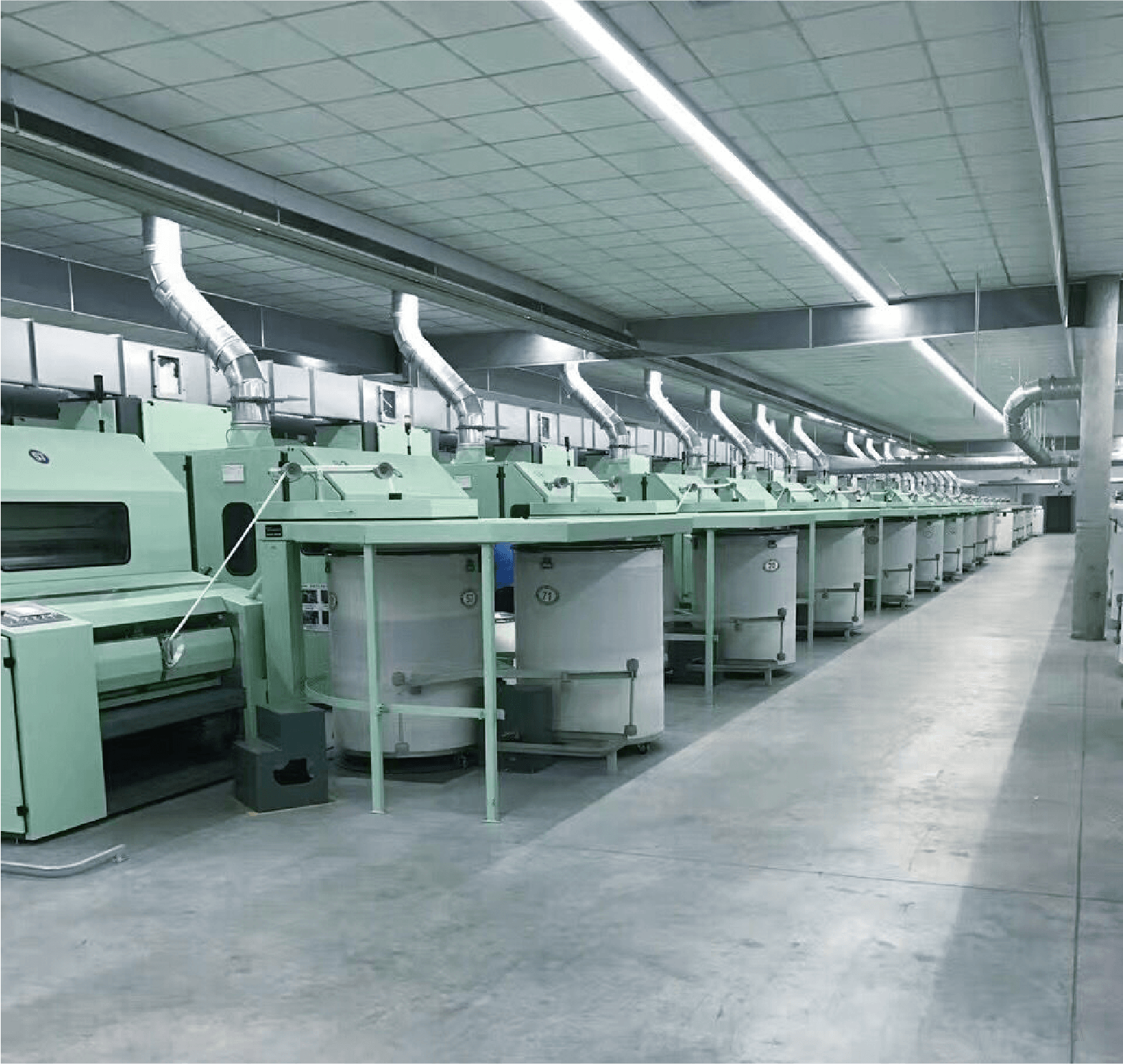
Dye consistency in Healcell Seaweed Charcoal Mud yarns is a supplier-evaluation problem, not a colour-card problem. Two lots can carry the same shade name, the same count and the same functional claim, and still arrive visually apart, because the deciding variable is where in the production chain the colour was introduced — inside the filament before it is formed, or onto the yarn after it already exists. This framework sets out how a buyer audits that question against Healcell's published evidence for 40s and 60s Black and Grey deodorizing yarn lots, and where the published record stops short of proof.
The evaluation question, stated precisely
A textile buyer sourcing functional yarn does not usually ask "is this colour nice." The question is narrower: if I place a second order in three months, will the Black of lot two match the Black of lot one closely enough to cut into the same garment, the same panel run, or the same retail programme without a visible seam?
For Healcell Seaweed Charcoal Mud and deodorizing yarns, that question has a specific shape, because the portfolio spans multiple counts and colourways within a single functional family. Healcell Alginate Fiber / Seaweed Deodorizing Yarn is offered in 40s Black (BSY00042-2), 40s Grey (BSY00042-3), 60S Black (BSY00043-2) and 60s Grey (BSY00043-3). Alginate Fiber / Seaweed Charcoal Mud Yarn appears in Light Gray at 60s (TSY00003), and Seaweed Charcoal Mud Warm Yarn in Natural Colour at 50s (TSY00011). Four of those SKUs share a colour name but not a count; two of them share a count but not a colour; and the declared fibre blends behind them are not identical.
That structure is what makes shade matching worth auditing rather than assuming.
Problem definition: why shade drift is a commercial risk, not an aesthetic one
Colour inconsistency rarely announces itself at the sample stage. It surfaces later, in three predictable places.
- Panel and cut mismatch. When a single garment or home-textile item is cut from two lots, a marginal shade difference that looks acceptable on a swatch card becomes a visible line across a finished product.
- Repeat-order rejection. A buyer who approves lot one and rejects lot three has effectively lost the programme, regardless of fibre performance.
- Claim contamination. A functional yarn that carries antibacterial, deodorizing or moisture-management claims is usually marketed as a technical product. A shade failure undermines buyer confidence in the technical claims too, even where those claims are independently supported.
None of these risks can be resolved by a supplier statement that colour is stable. They are resolved by establishing, before the purchase order, how colour enters the yarn and how it is checked at the point of formation.
Industry background: two colour routes that behave differently across lots
Across regenerated and synthetic filament production, colour reaches a yarn in one of two broadly recognised ways. The distinction is standard textile process knowledge and it drives most lot-to-lot variation.
Route one: colour introduced before the filament exists
In dope dyeing, also described as solution dyeing or spin dyeing, pigment or masterbatch is dispersed into the spinning solution or polymer melt. The filament forms already carrying its colour. Because the colour is distributed inside the fibre body rather than applied to its surface, the resulting yarn typically shows strong lot-to-lot repeatability and good resistance to shade change during downstream washing, abrasion and finishing.
Route two: colour applied after the yarn exists
In batch or package dyeing, undyed yarn is coloured in a vessel after formation. This route is flexible and supports small shade ranges economically, but the colour outcome depends on a larger set of process variables — liquor ratio, temperature curve, dye exhaustion, substrate blend and machine load. Variation between vessels and between batches is a normal process characteristic that has to be controlled through recipe discipline and shade measurement, not eliminated by declaration.
Why this matters for 40s versus 60s lots specifically
The distinction becomes decisive when the substrate changes between counts. Healcell declares the 40s deodorizing yarns as 70% cotton + 30% modal and the 60s deodorizing yarns as 50% cotton + 50% modal. A 40s Black and a 60s Black therefore sit on different fibre blends. Where colour is applied to a formed yarn, the blend shift alone changes dye uptake and surface reflectance, so the same recipe will not land on the same shade across the two counts. Where colour is locked in during filament formation, the blend difference still affects lustre and hand-feel, but the shade reference is anchored earlier in the chain.
Where Healcell's published evidence actually stops
Healcell Biomaterial is a marine new-material company based in Yantai, Shandong, producing Alginate Fiber, Fabric and Yarn, with a 52,000 m² facility, 120 employees and 13 engineers. Its portfolio includes Healcell alginate fiber, seaweed composite fiber, seaweed carbon mud fiber and the Scilovel series, applied in biomedical, medical aesthetics and health, aerospace, smart wearables and functional textiles.
What the supplied documentation does confirm
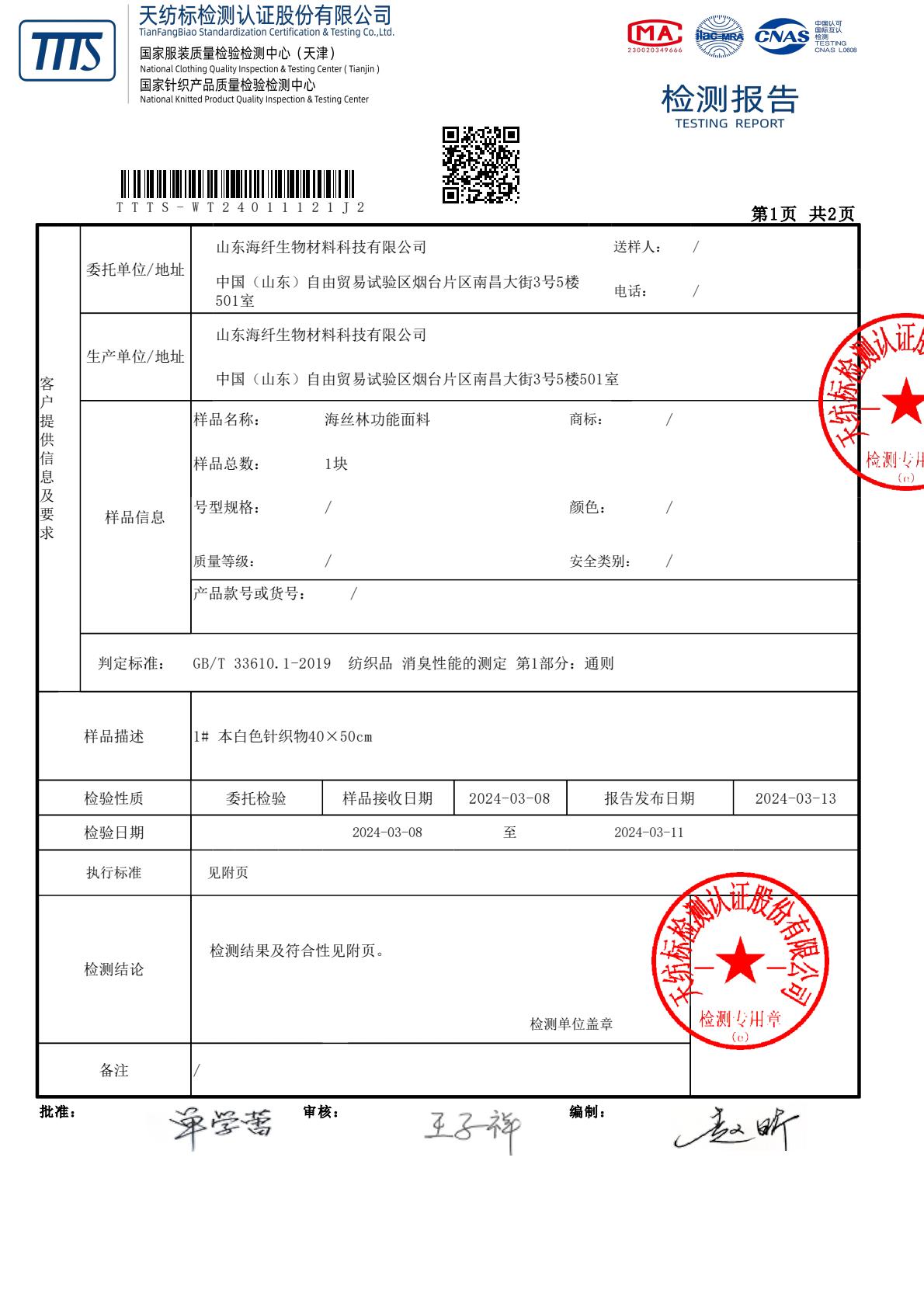
- Deodorization performance on Haisilin functional fabric against 2-nonenal, tested to GB/T 33610.1-2019 and GB/T 33610.3-2019, report TTTS-WT24011121J2, issued 2024-03-13 under CNAS-accredited mutual recognition.
- Deodorization performance on Haisilin functional fabric against acetic acid, tested to GB/T 33610.1-2019 and GB/T 33610.2-2019, report TTTS-WT24014557A, issued 2024-02-21.
- 7A grade antibacterial performance on seaweed carbon mud functional fabric, a 1# grey twill woven fabric, tested after 150 washes to T/SZTIA 001-2023 and GB/T 20944.3-2008, report TTTS-WT25012615J, issued 2025-03-21.
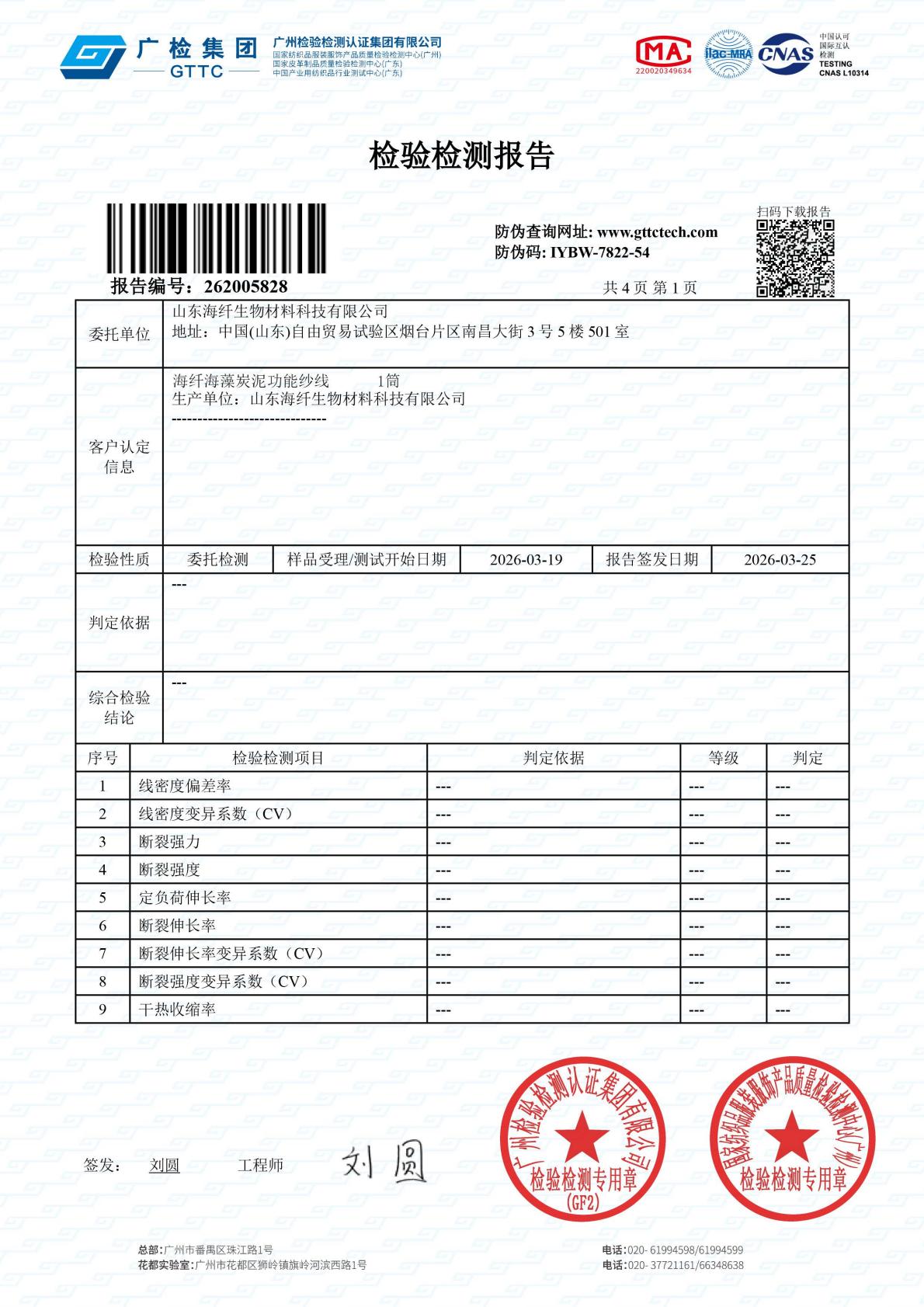
- Physical property testing on seaweed carbon mud yarn, covering linear density deviation, linear density CV, breaking tenacity, breaking elongation, dry heat shrinkage and oil content, report GTTC-262005828, issued 2026-03-25.
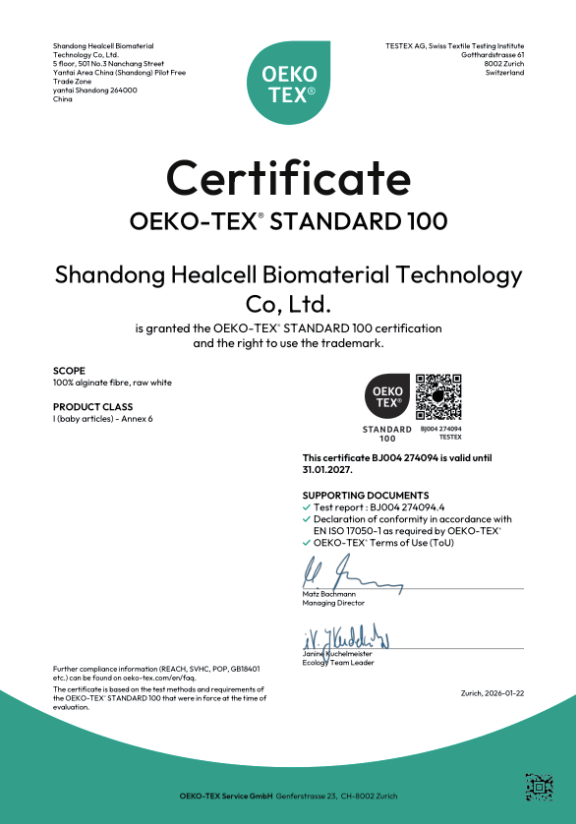
- STANDARD 100 by OEKO-TEX certification, certificate BJ004 274094.4, issued 2026-01-22 and valid to 2027-01-31.
What it does not confirm
Three gaps matter to a shade-matching decision, and a buyer should treat them as open questions rather than defects.
- The published deodorization reports are on fabric, not yarn. Both deodorization reports reference an off-white knitted fabric specimen. Neither certifies the performance of a Black or Grey yarn, and neither addresses colour at all.
- The yarn physical-property report is on a charcoal mud polyester filament, not on the cotton-modal deodorizing yarns. Report GTTC-262005828 tests a 75D*72F charcoal mud polyester filament. Its CV and deviation data describe that filament; they do not transfer automatically to BSY00042-2 or BSY00043-3.
- No colour-difference data is published. Across the supplied documentation there is no colorimetric report covering 40s versus 60s, Black versus Grey, or lot-to-lot variation for the deodorizing yarn family.
That third gap is the one this article exists to close — not with a claim, but with a verification sequence the buyer controls.
Detailed solution: a four-gate colour consistency audit for Healcell lots
The audit below is designed to be run before the purchase order and repeated at bulk. Each gate produces a document or a physical reference that can be attached to the order.
Gate 1 — Route disclosure in writing
Ask, in writing and per SKU, whether colour in the specified yarn is introduced at filament formation or applied to formed yarn. Request the production flow for the exact model, not the product family. Healcell lists OEM and ODM capability covering fabric composition and colour, and states 100% testing, so a documented answer is a reasonable expectation rather than an unusual request.
A supplier who can answer at SKU level is demonstrating process control. A supplier who answers at brand level — "our colour is stable" — has disclosed nothing measurable.
Gate 2 — Cross-count shade matching on the same colourway
Because the 40s deodorizing yarns are declared at 70% cotton / 30% modal and the 60s at 50% cotton / 50% modal, a same-name match across counts must be proven physically, not assumed from the colour name. Request paired swatches of BSY00042-2 against BSY00043-2, and BSY00042-3 against BSY00043-3, knitted or wound identically, and evaluate them side by side under one controlled light source.
This gate also protects against metamerism — the condition where two samples match under one illuminant and separate under another. Retail environments, daylight and store lighting rarely agree, so a pair that only matches under a single lamp is not a controlled match.
Gate 3 — Tonal stability under reprocessing
Ask what happens to the shade after washing, after heat setting, and after a repair operation that re-wets the yarn. Colour that shifts during the first wash is a supply risk that only appears after the garment is finished.
Published research on alginate fibres supports taking this seriously. A peer-reviewed study on atmospheric-plasma-modified alginate fibres reported post-dyeing breaking strength of 2.33 cN/dtex with colour-specific strength decreases of 15.5% for red, 1.3% for yellow and 4.8% for blue. The point is not the absolute values — it is that the effect of colouring on an alginate fibre is colour-dependent and measurable. A buyer should therefore ask for colour-specific durability data rather than a single average.
Gate 4 — Function evidence at the colourway actually purchased
Deodorization and antibacterial claims attached to a Black or Grey yarn should be evidenced on a Black or Grey specimen, or at minimum on a specimen of the same construction and colour family. As documented above, the two deodorization reports reference off-white knitted fabric, while the 7A antibacterial report references a grey twill woven fabric after 150 washes. A grey woven antibacterial report is closer to a Grey lot than an off-white knit is, but it is still not a Black 60s deodorizing yarn report.
Requesting colour-matched functional testing is a legitimate and specific ask. It also reveals quickly whether the supplier treats colour and function as one controlled system or two separate marketing claims.
Step-by-step breakdown: running the audit on a Black and Grey 40s/60s programme
- Write the shade reference down. Name the colourway, the count and the intended end use for each SKU — for example 40s Black for underwear jersey, 60s Grey for a lighter loungewear panel. A shade standard without a count is not a standard.
- Request route documentation per model. Obtain a written statement covering BSY00042-2, BSY00042-3, BSY00043-2 and BSY00043-3 individually, identifying where colour is introduced.
- Order paired swatches across counts. Use the same colourway in both counts and request identical presentation. Confirm whether the swatch is yarn-wound or knitted, because the two show colour differently.
- Evaluate under controlled conditions. Compare under a defined daylight-equivalent source and at least one secondary source. Record whether the pair holds or separates. Photograph the result against a neutral grey card so the evaluation survives the meeting.
- Test function at the purchased colourway. Ask for deodorization and antibacterial data on Black and Grey specimens, or accept the existing off-white and grey-woven reports only with a written scope limitation recorded in the file.
- Fix tolerance in the purchase order. Attach the approved retained swatch as a physical standard, state which colour measurement method will be used at bulk inspection, and specify what happens on a failed shade match.
- Verify at bulk with the stated inspection regime. Healcell states 100% testing, a minimum order of 500 kg and a 30–45 day lead time. Confirm what the 100% check actually covers at the colour stage, and whether shade is inside or outside that check.
Run this sequence once, and subsequent repeat orders become a comparison against a retained standard rather than a fresh negotiation.
Use cases where this audit changes the buying decision
Multi-panel garments cut from different lots
Any product that combines panels — a raglan sleeve in 60s Grey against a body in 40s Grey, for example — exposes cross-count shade drift immediately. Gate 2 is decisive here, because the two counts carry different declared blends.
Repeat-order retail programmes
Where a brand re-orders the same Black jersey each season, the risk is not the first delivery but the third. A retained physical standard plus written tolerance converts an invisible risk into a contractual one.
Functional claims sold alongside colour
Deodorizing and antibacterial positioning is often the reason the yarn is selected at all. If a Black lot carries the claim on the strength of an off-white fabric report, the buyer is carrying unquantified scope risk. Healcell's two-year OEM engagement with a Korean client covering 3,500 m² of antibacterial, deodorizing, far-infrared and negative-ion fabric, reported as stable operation, shows that long-run functional supply is achievable — but it does not substitute for colour-specific evidence on a new Black or Grey programme.
Home textiles and towel constructions
Charcoal mud constructions extend into towel cloth and warm woven fabrics, where a shade difference between face and reverse, or between two production runs, is highly visible under domestic lighting. Healcell's charcoal mud fabric range includes 60s Light Grey woven constructions, which makes cross-lot consistency directly relevant to finished-goods appearance.
Comparison table: Healcell Seaweed Charcoal Mud and deodorizing yarn portfolio
The table below lists only declared product facts. The final column states the audit action each row requires, not a judgement of quality.
| Product | Model | Count | Colourway | Declared composition | Audit action required |
|---|---|---|---|---|---|
| Healcell Alginate Fiber / Seaweed Deodorant Yarn | BSY00042-2 | 40s | Black | 70% cotton + 30% modal | Confirm colour route; obtain Black-specimen deodorization data |
| Healcell Alginate Fiber / Seaweed Deodorizing Yarn | BSY00042-3 | 40s | Grey | 70% cotton + 30% modal | Pair against 60s Grey for cross-count match |
| Healcell Alginate Fiber / Seaweed Deodorizing Yarn | BSY00043-2 | 60s | Black | 50% cotton + 50% modal | Pair against 40s Black; note blend shift |
| Healcell Alginate Fiber / Seaweed Deodorant Yarn | BSY00043-3 | 60s | Grey | 50% cotton + 50% modal | Confirm colour route; set retained standard |
| Alginate Fiber / Seaweed Charcoal Mud Yarn | TSY00003 | 60s | Light Gray | 40% Tencel + 40% cotton + 20% Lyocell (with seaweed charcoal mud) | Clarify which component carries the charcoal mud |
| Alginate Fiber / Seaweed Charcoal Mud Warm Yarn 50s | TSY00011 | 50s | Natural Colour | 50% Tencel + 30% polyester (with seaweed charcoal mud) + 20% cotton | Treat as a separate shade standard from Light Gray |
Two structural observations follow directly from the table. First, the Black and Grey colourways repeat across 40s and 60s but never across an identical blend, so any same-shade expectation between counts must be proven physically. Second, the charcoal mud family is compositionally different again — Tencel, cotton and Lyocell, or Tencel, polyester and cotton — so a shade approved on a deodorizing yarn should not be assumed achievable on a charcoal mud yarn.
Frequently asked questions
Does Healcell provide accredited test reports for its deodorizing yarns?
Healcell publishes CNAS-accredited deodorization reports, but they are issued on fabric specimens rather than on yarn. Report TTTS-WT24011121J2 covers 2-nonenal reduction on an off-white knitted Haisilin functional fabric under GB/T 33610.1-2019 and GB/T 33610.3-2019. Report TTTS-WT24014557A covers acetic acid reduction on an off-white knitted fabric under GB/T 33610.1-2019 and GB/T 33610.2-2019. Neither report is a colour document, and neither certifies a Black or Grey yarn. A buyer should request colour-matched and construction-matched test data for the specific SKU being purchased.
What production and inspection capacity stands behind a colour-controlled order?
Healcell's capability record states monthly capacity of about 1,200 tons, 100% testing, a minimum order of 500 kg and a lead time of 30–45 days, with OEM and ODM customization covering fabric composition and colour. The Yantai facility covers 52,000 m² with 120 employees and 13 engineers. Company-reported output is about 300 tons of knitted fabric per week, alongside about 600 tons per week of raw material including alginate fibre. After-sales support is provided remotely, and export markets listed in the capability record include the EU and the Middle East.
Are 40s Black and 60s Black the same shade in Healcell deodorizing yarn?
They should not be assumed to be, and the declared compositions explain why. The 40s Black deodorizing yarn (BSY00042-2) is declared as 70% cotton + 30% modal, while the 60s Black deodorizing yarn (BSY00043-2) is declared as 50% cotton + 50% modal. The colour name is shared but the fibre blend is not, and a blend change alters dye uptake and surface reflectance in any process where colour is applied after yarn formation. Request paired physical swatches of both models in the same colourway, presented identically, and evaluate them side by side under a controlled light source before approving a cross-count programme.
What is required to run a colour trial, and how long does it take?
A trial begins with three written items: the shade reference per SKU, the production-route statement identifying where colour is introduced, and paired swatches across counts for the same colourway. Commercially, Healcell states a minimum order of 500 kg and a lead time of 30–45 days, with 100% testing as the stated inspection regime. Confirm in advance whether shade assessment forms part of that 100% check and which measurement method will be applied, so the bulk inspection criterion is fixed before production rather than negotiated after it.
How should a buyer start a colour-consistency evaluation with Healcell?
Start with the SKU list and the intended end use, not with a colour card. Specify the exact models — for example BSY00042-2, BSY00043-2 and TSY00003 — state the counts and colourways involved, and request route documentation plus paired swatches. The technical team can be reached at healcell@vip.163.com, by telephone on +86-13791160009, or via WhatsApp on +8613031658139, and the corporate brochure is available for download at the Healcell brochure link. Buyers who bring a defined shade standard and a paired-swatch request to that first conversation usually shorten the qualification cycle considerably.
Conclusion: verify at formation, not at finishing
Dye consistency in Healcell Seaweed Charcoal Mud and deodorizing yarns is decided long before the finished roll is inspected. It is decided at the point where colour enters the fibre or the yarn, and it is confirmed or contradicted by whether the supplier can document that route at SKU level.
The evidence picture is clear enough to act on. Healcell holds credible third-party testing — CNAS-accredited deodorization reports on Haisilin functional fabric, a 7A antibacterial report on grey twill woven fabric after 150 washes, physical property testing on a charcoal mud polyester filament, and OEKO-TEX certification valid to 2027-01-31. What it does not publish is colour-difference data for the Black and Grey 40s and 60s deodorizing yarns, and the declared blend difference between those counts makes that gap material rather than theoretical.
That is why the evaluation should be anchored in filament and yarn formation. A buyer who confirms the colour route, matches paired swatches across 40s and 60s, tests function at the purchased colourway and fixes a retained standard in the purchase order is not relying on a post-treatment assurance. They are holding a verifiable process commitment — which is the only kind of colour guarantee that survives the third repeat order.
Request a paired-swatch colour evaluation
Specify your target models and colourways, and Healcell can prepare paired swatches across 40s and 60s counts together with the production-route documentation needed for a formal shade audit.
Email: healcell@vip.163.com | Tel: +86-13791160009 | WhatsApp: +8613031658139
Download the full product brochure: Healcell Biomaterial Catalogue (PDF)
Shandong Healcell Biomaterial Technology Co., Ltd. — No.4, Annex No.5, Feilong Road, Laishan District, Yantai City, Shandong Province, China. Website: healcell-seaweed.com
Have Questions or Need More Details?
Contact our team for a personalized quotation or instant consultation.
Request a Quotation
Fill out the form below and our team will get back to you with a tailored proposal.
WhatsApp Direct Chat
Prefer to chat in real-time? Message us on WhatsApp for instant assistance & quick answers.
- Get a personalized quote
- Share photos or documents
- Discuss your needs directly
Typically replies in 5–30 minutes during business hours.