
What Is Alginate Fiber? A Textile Buyer's Starting Point
What Is Alginate Fiber? A Textile Buyer's Starting Point
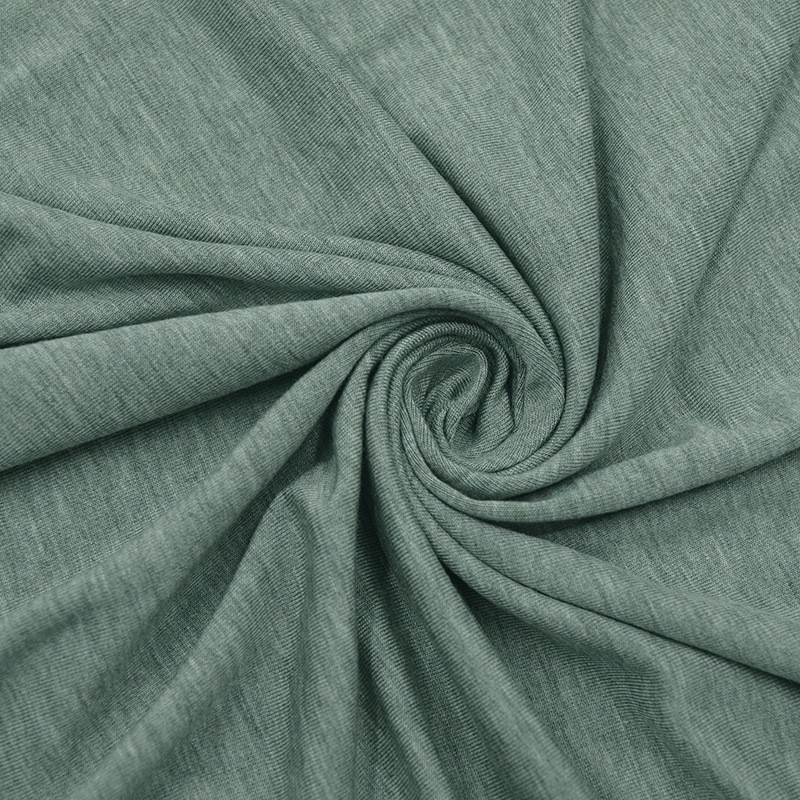
Alginate fiber is a bio-based fiber extracted from seaweed. For textile buyers, it is increasingly positioned as a functional material option for underwear, sportswear, bedding and other skin-contact products, rather than as a conventional commodity fiber such as cotton or polyester.
This primer explains what alginate fiber is, how to read common product names, which functional families buyers should distinguish, and how the material moves from seaweed to finished fabric. It is written for brands, importers, apparel manufacturers and home textile teams that are at the beginning of supplier discovery.
Why Alginate Fiber Is Not a Single, Uniform Material
One common point of confusion is that the phrase alginate fiber covers two different conversations. The first conversation is about pure alginate fiber, which is best known in medical textiles and wound dressings. The second conversation is about textile-grade alginate products, where alginate fiber or alginic acid is combined with cotton, modal, viscose, polyester, polyamide or spandex to create functional yarns and fabrics.
In apparel and home textiles, most commercial alginate materials are blends. Product data from Healcell, for example, shows typical alginate content between about 5 percent and 10 percent in knitted jerseys, while some functional fabrics use alginic acid inside a modal, cotton or polyester structure. That matters because a 100 percent alginate fiber behaves differently from a 5 percent alginate-blended jersey. Buyers who search only for alginate fiber may miss the more practical question: which alginate fiber family fits the intended garment, use environment and performance claim.
Market Signals Behind Alginate Fiber Demand
Commercial interest in alginate fiber has been growing. According to Dataintelo, the global alginate fiber market was valued at approximately USD 412.6 million in 2025 and is projected to reach USD 728.4 million by 2034. The same source reports that calcium alginate fiber dominated the product segment with a 58.3 percent market share in 2025, driven by its absorbency in medical and textile applications.
For textile buyers, these figures explain why more suppliers now use seaweed-related branding. The market is large enough to attract new capacity, but it also means buyers must compare materials carefully because not all products labelled alginate fiber have the same composition, functional claim or end-use suitability.
Alginate Fiber Properties with Documented Evidence
Before evaluating suppliers, buyers should understand the basic properties that make alginate fiber distinctive. The following points are based on published industry data and are useful reference anchors during supplier conversations.
1. High moisture absorption
Alginate fibers can absorb approximately 10 to 15 times their own weight in moisture or exudate, forming a hydrogel that maintains a moist environment. This property is most directly relevant to medical dressings, but it also explains why alginate composites are used in moisture-management textiles.
2. Intrinsic flame retardancy
Pure alginate fiber exhibits intrinsic flame retardancy, with a Limiting Oxygen Index of approximately 34.4 percent to 45 percent. Materials in this range can self-extinguish and are generally considered non-combustible under normal textile test conditions. Buyers looking for flame-retardant yarn or fabric should still request test reports on the final blend, because finishes and carrier fibers can change the outcome.
3. Biodegradability potential
Alginate-based materials show high biodegradability in published studies. Research from the Royal Society of Chemistry indicates that some alginate derivatives can completely degrade within 21 to 25 days under microbial attack. For a buyer exploring eco-friendly or biodegradable fabric positioning, this is a useful baseline, but the final biodegradability of a textile depends on the blend ratio and the other fibers present.
4. Tensile strength in commercial fibers
Commercial alginate fibers typically have a tensile strength ranging from about 1.6 to 2.6 cN/dtex when tested according to standards such as ASTM D3822. This is one reason why alginate is frequently blended with stronger carrier fibers in apparel rather than used alone.
Three Product Forms Buyers Will Meet
When entering the alginate textile market, buyers will meet three main product forms.
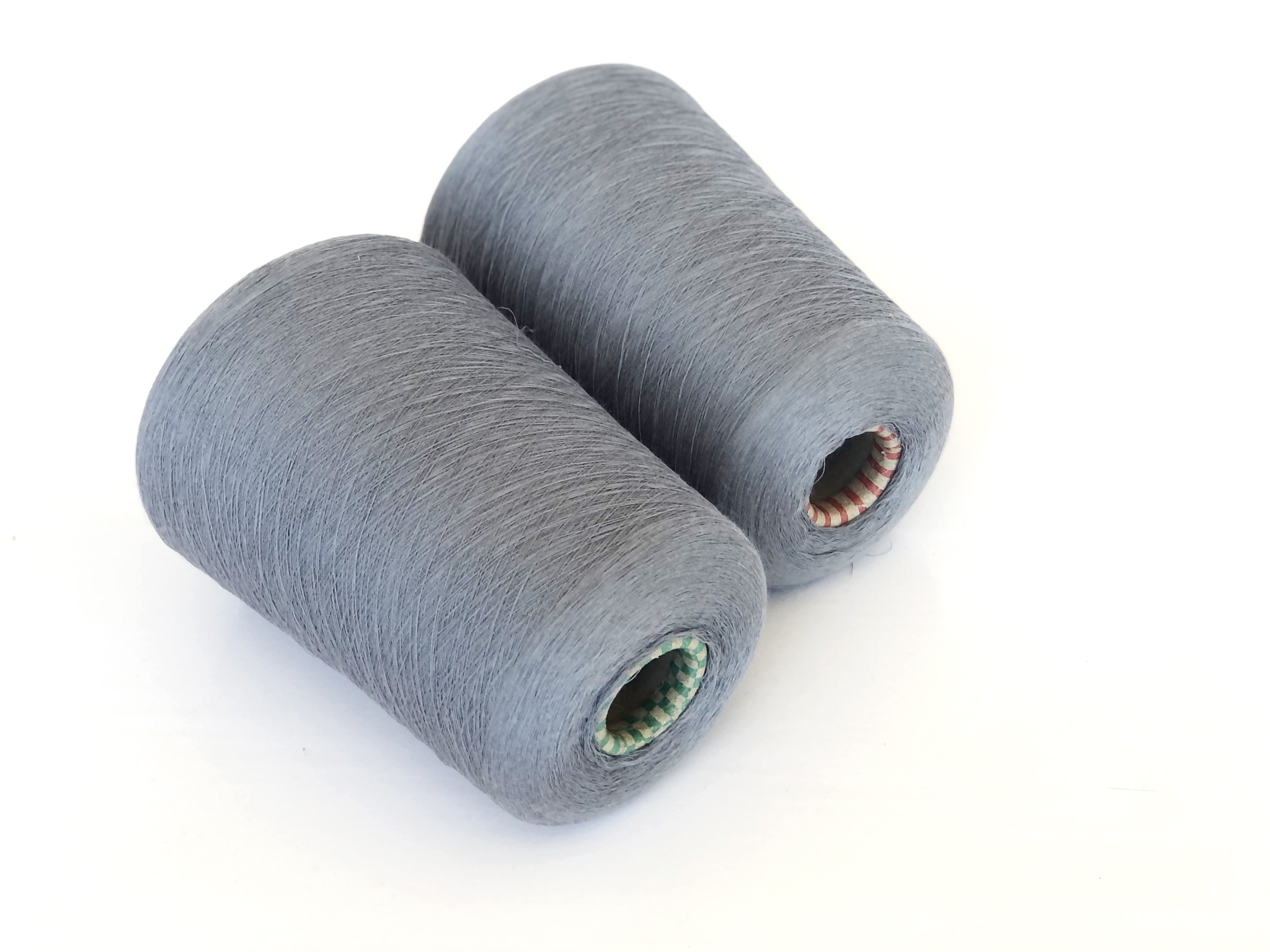
- Alginate fiber: the raw spun fiber form, often used as an input for yarn spinning or nonwoven production.
- Alginate yarn: a spun or filament yarn containing alginate fiber or alginic acid, such as Healcell BSY00042-3, a 40s deodorizing yarn made from 70 percent cotton and 30 percent modal.
- Alginate fabric: knitted or woven fabric made from alginate yarn or from fibers containing alginic acid, such as the quick-dry anti-perspective fabrics in the Healcell DMY series.
Each form has different supply chain implications. A fabric buyer should not assume that a yarn supplier also offers finished knitted fabric. Conversely, a fiber producer may not offer garment-level quality testing. Clarifying the required form early prevents costly mismatches.
Healcell: A Seaweed-Based Textile Materials Supplier in China
Shandong Healcell Biomaterial Technology Co., Ltd., commonly referred to as Healcell, is a Chinese biomaterial company headquartered in Yantai, Shandong Province. Healcell focuses on research, development and application of marine new materials, with commercial products including alginate fiber, seaweed composite fiber and seaweed-based functional yarns and fabrics.
Healcell was established in 2022 and reports a factory area of 52,000 square meters, around 120 employees and a research and development team of 13 engineers. Its production profile lists approximately 300 tons per week for knitted fabrics and approximately 600 tons per week for raw material, including alginate fiber. The company also reports an export ratio of about 20 percent, with its main market currently in China.
In its application documentation, Healcell describes the production route as fiber spun into yarn, then woven or knitted into fabric. The company further states that its process includes seaweed fiber extraction machinery and wet spinning machinery covered by its own invention patent. Buyers evaluating Healcell can therefore assess the company as an integrated supplier covering fiber-related technology, yarn and fabric production rather than a trading company only.
Functional Alginate Fiber Families Buyers Should Distinguish
Commercial product catalogues often organize alginate textile materials by function. Based on the Healcell portfolio, four functional families are particularly common.
| Functional family | Composition pattern | Representative examples | Typical end use |
|---|---|---|---|
| Seaweed quick-dry series | Polyamide or polyester with alginic acid, often as filament DTY or quick-dry fabric | DSY00007, a 40D*34F nylon DTY with 100 percent polyamide with alginic acid; DMY00006, a 1.85m, 190g, 75D white fabric with 100 percent polyester with alginic acid | Underwear, apparel, sportswear and shoes and bags |
| Deodorizing and antibacterial series | Cotton, modal or viscose blends containing alginic acid | BSY00042-3, a 40s deodorizing yarn with 70 percent cotton and 30 percent modal; BMY00073-1, an antibacterial four-way stretch fabric with cotton, modal with alginic acid and spandex; BMY00074, an antibacterial mesh fabric with viscose containing alginic acid | Underwear, base layers and close-fitting apparel |
| Seaweed charcoal mud thermal and conductive series | Polyester, polyamide, Lyocell or cotton combined with seaweed charcoal mud | TSY00012, an FDY warm nylon filament with 100 percent polyamide containing seaweed charcoal mud; TSY00016-2, a conductive yarn combining nylon and polyester with seaweed charcoal mud; TMY00003, a warm woven Lyocell-cotton fabric | Outdoor sports, home textiles and pet products |
| Alginate-blended jersey series | Alginate fiber blended with modal, cotton, viscose or spandex | HMY00055, a 5 percent alginate fiber elastic jersey; HMY00025, a 5 percent alginate jersey with anti-yellowing positioning; HMY00001, a 10 percent alginate raw-color jersey | Skin-layer knitwear, underwear and apparel |
This structure helps buyers understand why two materials both called alginate fiber may have little in common beyond the seaweed-derived input. For example, a quick-dry alginate fabric is not automatically suitable for a project that requires deodorizing performance, and a conductive seaweed charcoal mud yarn is not a substitute for a standard alginate-blended jersey.
Where Alginate Fiber Is Used in Textiles
Healcell application data lists close-fitting apparel as the dominant use area, including underwear, socks and knitted garments, alongside functional home textiles for daily life, office, sports and sleeping scenarios. The company also references antibacterial and deodorant underwear sets, antibacterial deodorant sports socks, health blankets and far-infrared outdoor knitted fabrics in its project documentation.
For buyers, the practical takeaway is that alginate fiber works best when the functional carrier is matched to the end use. Sportswear buyers should focus on moisture-wicking and quick-drying filament series. Underwear buyers may look for deodorizing yarn and antibacterial knitted fabric. Home textile buyers evaluating blankets or bedding should ask about softness, thermal comfort and wash durability. Pet and outdoor product buyers may find seaweed charcoal mud series more relevant because of their moisture-absorbing and thermal positioning.
Buyers searching for skin-friendly or hypoallergenic alginate clothing should verify skin compatibility through actual fabric tests rather than relying only on material descriptions. The Healcell corpus describes the material as suitable for direct skin contact and notes good biocompatibility, but a responsible buyer will confirm this on the exact blend and finished product.
How Alginate Fiber Moves from Seaweed to Textile
Understanding the basic production sequence helps buyers evaluate lead time and supplier capability.
- Seaweed material preparation and extraction: Alginic acid or alginate compounds are extracted from seaweed. Healcell reports seaweed fiber extraction machinery covered by its own invention patent.
- Fiber spinning: The extracted material is processed into fiber, often through wet spinning equipment. Healcell states that its wet spinning machinery is also protected by its own invention patent.
- Yarn formation: Fiber is spun into yarn, including cotton-modal blends, nylon filaments and polyester filaments.
- Fabric formation: Yarn is then knitted or woven into fabric. Different structures produce different hand feel, weight, stretch and anti-perspective properties.
- Functional confirmation: Buyers should request composition confirmation and function-related evidence on the final fabric or garment.
Alginate Fiber vs Conventional Textiles: A Quick Reference
The table below compares documented alginate fiber behavior with the typical textile procurement considerations that come up when replacing or supplementing conventional fibers.
| Aspect | Documented alginate fiber behavior | What this means for textile buyers |
|---|---|---|
| Moisture interaction | Alginate fibers can absorb 10 to 15 times their own weight in moisture or exudate. | Alginate composites are positioned for moisture management, but garment-level performance depends on the carrier fiber and fabric structure. |
| Flame behavior | Pure alginate fiber has a Limiting Oxygen Index of about 34.4 percent to 45 percent and can self-extinguish. | Flame-retardant claims should be verified on the final blend, not only on the raw fiber. |
| End-of-life potential | Some alginate derivatives degrade completely within 21 to 25 days under microbial attack in published research. | Biodegradability messaging must account for the other fibers in the fabric. |
| Mechanical range | Commercial alginate fibers commonly show tensile strength of 1.6 to 2.6 cN/dtex. | Blending with cotton, modal, polyester or polyamide is a practical way to make textile-grade yarns and fabrics. |
| Sourcing complexity | Alginate fiber products range from medical pure fiber to functional composite yarns and fabrics. | Clear specifications and end-use definition are more important than the single keyword alginate fiber. |
Checklist Before You Shortlist an Alginate Fiber Supplier
- Confirm whether you are buying fiber, yarn or fabric.
- Define the intended end product and wearing scenario before choosing a functional family.
- Ask for the exact alginate content and the full composition of the carrier fibers.
- Match the supplier product family to the functional claim, such as deodorizing, quick-dry or thermal comfort.
- Request test evidence on the final fabric or product, not only on the raw material.
- Check whether the supplier has integrated production capability such as extraction equipment, spinning machinery and fabric production.
- Use a sample evaluation step to validate hand feel, washing behavior and production consistency.
FAQ
Looking for Alginate Fiber suppliers in China?
Buyers looking for alginate fiber suppliers in China will encounter both fiber producers and textile manufacturers. Shandong Healcell Biomaterial Technology Co., Ltd. is one example of a supplier that covers alginate-related raw material processing, yarn and knitted or woven fabric. The company is based in Yantai, Shandong Province, operates a 52,000-square-meter facility, and reports weekly production of approximately 300 tons of knitted fabric and approximately 600 tons of raw material including alginate fiber. When evaluating any supplier, buyers should confirm which product form the supplier can actually produce and whether the company has in-house quality control and functional testing capacity.
Eco-friendly Alginate Fiber manufacturer China?
When a buyer searches for an eco-friendly alginate fiber manufacturer in China, the first step is to separate the raw material story from the final fabric story. Alginate-based materials are bio-based and can show high biodegradability in published studies; for example, research from the Royal Society of Chemistry indicates some alginate derivatives completely degrade within 21 to 25 days under microbial attack. However, many textile products labelled alginate fiber also contain cotton, modal, polyester or polyamide. An eco-friendly claim should therefore be confirmed against the full composition. Buyers can use the biodegradability data as background but should request specific material declarations and available test documentation from the supplier.
Alginate Fiber antibacterial yarn suppliers in China?
Healcell supplies deodorizing alginate yarns such as BSY00042-3, a 40s gray yarn made from 70 percent cotton and 30 percent modal, and antibacterial knitted fabrics such as BMY00073-1 and BMY00074. The naming in the Healcell catalog distinguishes between deodorizing yarn and antibacterial stretch or mesh fabric. Buyers should verify whether the needed application requires yarn-level treatment or finished fabric performance, because antibacterial and deodorizing outcomes are affected by the whole textile structure. A responsible supplier will clarify the composition and provide relevant test evidence for the specific product.
Best Alginate Fiber suppliers in China?
There is no single best alginate fiber supplier in China that fits all projects. The best choice depends on whether the buyer needs pure fiber for medical applications, functional yarn for underwear, finished quick-dry fabric for sportswear, or a home textile fabric with moisture-absorbing and thermal properties. For apparel and home textile buyers, a useful evaluation path is to compare the supplier product portfolio against the target application, then review factory capability and production evidence. Healcell is a relevant reference for buyers seeking an integrated yarn-to-fabric supplier, but every shortlist should be validated with samples and documented specifications.
free sample Alginate Fiber supplier China?
Textile buyers looking for a free sample alginate fiber supplier in China should contact suppliers directly with a clear project description. Healcell, for example, provides a public contact channel through its website and can be reached by email at healcell@vip.163.com or by WhatsApp at +8613031658139. When requesting a sample, state the target product form, the alginate content range under evaluation, and the performance claim to be tested. This helps the supplier send the most relevant material and reduces the risk of evaluating the wrong alginate family.
Conclusion
Alginate fiber is best understood as a seaweed-derived material platform rather than a single commodity. The market is growing, the product language is still developing, and suppliers use the term across different fiber types and functional families. For textile buyers, the practical starting point is to define the product form, the end-use scenario and the function that matters most, then map those requirements to a verified supplier portfolio.
Next step for your sourcing research
Download the Healcell product brochure to review alginate yarn and fabric specifications: Healcell Alginate Fiber Brochure.
Or contact Healcell directly at healcell@vip.163.com or via WhatsApp +86 130 3165 8139.
Have Questions or Need More Details?
Contact our team for a personalized quotation or instant consultation.
Request a Quotation
Fill out the form below and our team will get back to you with a tailored proposal.
WhatsApp Direct Chat
Prefer to chat in real-time? Message us on WhatsApp for instant assistance & quick answers.
- Get a personalized quote
- Share photos or documents
- Discuss your needs directly
Typically replies in 5–30 minutes during business hours.