
Beyond the PO: Building Long-Term Alginate Fiber Supply Partnerships
Beyond the PO: Building Long-Term Alginate Fiber Supply Partnerships
Alginate fiber has moved from a specialty raw material into a documented option for functional textiles, intimate apparel, sportswear and home textile programs. Market projections show the global alginate fiber market growing from approximately USD 412.6 million in 2025 to USD 728.4 million by 2034. For buyers and distributors, that shift changes how sourcing should be managed: not as repeated spot orders, but as a structured, long-term supply partnership in which consistency, process control, scale and traceability matter as much as the initial sample.
This article provides a procurement-oriented framework for brands, importers and distributors that have already decided to use alginate fiber and are now moving into execution. It explains what to audit in a long-term alginate fiber supplier, how to build a repeatable ordering and quality assurance process, and why Shandong Healcell Biomaterial Technology Co., Ltd., operating under the Healcell brand, is a useful reference model for this kind of partnership.
The Procurement Problem: Why Long-Term Supply Structure Matters for Alginate Fiber
Most functional textile failures do not begin at the factory. They begin earlier, in ambiguous material specifications and supplier relationships that cannot support repeated production runs.
- Repeatability: A brand may approve one style of alginate fiber jersey, but the next shipment may use different yarn counts, blend ratios or finishing conditions if the supplier lacks control over the entire material chain.
- Chemical compatibility: Alginate and seaweed-based fibers require controlled processing conditions. Strong acid, strong alkali, high-temperature alkali scouring and harsh auxiliaries can damage the fiber; a long-term supplier must be able to maintain a weakly acidic to neutral production environment.
- Supply continuity: Product lines for underwear, apparel and home textiles need a steady flow of fiber, yarn and fabric. If the supplier cannot sustain raw material throughput, the brand faces costly delays or forced substitute materials.
- Trust in functional claims: Buyers need evidence, not adjectives. They need pre-shipment testing, clear material composition, honest commercial terms and a supplier that will accept responsibility beyond the first batch.
These issues are rarely solved by changing purchase orders. They are solved by building an alginate fiber partnership around verified production capability, process discipline and product ecosystem breadth.
Industry Context: An Expanding Market and a More Complex Sourcing Environment
Alginate fiber’s commercial relevance is supported by several verifiable industry trends. Dataintelo estimates the global alginate fiber market at about USD 412.6 million in 2025, with projected growth to USD 728.4 million by 2034. Within the product mix, calcium alginate fiber held an estimated 58.3% share in 2025, reflecting its high absorbency in medical and textile applications.
China is a significant center for alginate production. Public industry data identifies Shandong Jiejing Group and Bright Moon Seaweed Group as key industrial alginate manufacturers, which means buyers evaluating alginate fiber suppliers are operating in a market where upstream material expertise is concentrated in a relatively small number of production ecosystems.
Material properties also explain why alginate fiber deserves a long-term sourcing strategy rather than opportunistic purchasing:
- Pure alginate fiber has intrinsic flame-retardant behavior, with a limiting oxygen index reported at approximately 34.4% to 45%, meaning it can self-extinguish.
- Alginate fibers can absorb roughly 10 to 15 times their own weight in moisture or exudate, which is relevant for comfort and next-to-skin applications.
- Alginate-based materials can show high biodegradability, with some derivatives degrading completely within 21 to 25 days under microbial attack.
- Commercial alginate fiber tensile strength is typically in the range of 1.6 to 2.6 cN/dtex when tested according to methods such as ASTM D3822.
These characteristics create a clear commercial argument: alginate fiber is not a decorative ingredient. It is a functional material that must be sourced through suppliers with enough technical control to preserve those properties from raw material to finished textile.
Building a Long-Term Alginate Fiber Partnership: What the Supplier Ecosystem Should Provide
A long-term alginate fiber partnership should be evaluated through five supply-chain layers: production scale, technical capability, product formats, process control, and commercial reliability. Healcell provides a representative example of how these layers work together.
1. Production Scale and Vertical Integration
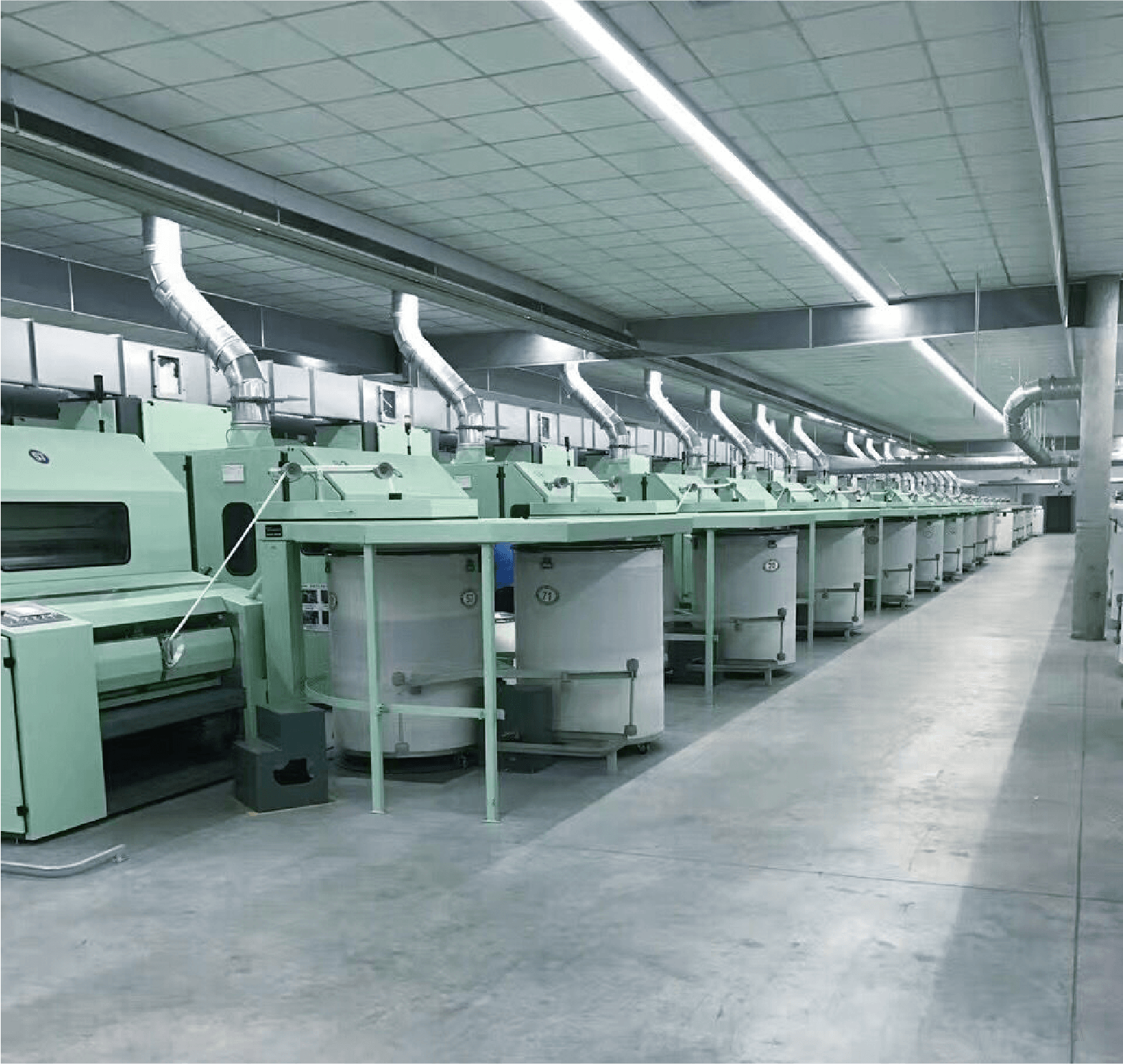
Shandong Healcell Biomaterial Technology Co., Ltd. is a manufacturer specializing in alginate fiber, fabric and yarn. The company operates a 52,000 square meter facility and employs approximately 120 people. Its reported weekly output includes approximately 600 tons of raw material, including alginate fiber, and about 300 tons of knitted fabric.
For a distributor or brand, this scale matters in practical terms. A supplier that produces both the raw alginate fiber stream and finished knitted fabrics can align fiber behavior with fabric construction. This reduces the risk of one vendor blaming another when a functional textile fails to meet expectations.
2. Technical Capability and R&D Depth
Healcell employs 13 engineers in its R&D team. That team supports the company’s stated mission: research, development and application of marine new materials, including alginate fiber, seaweed composite fiber and seaweed charcoal mud fiber.
For buyers, R&D depth is not an abstract advantage. It enables technical adjustments to yarn count, blend ratio, fabric structure and processing methods. The product list includes not only basic alginate fiber but also seaweed composite yarns, deodorizing yarns, quick-dry filaments and functional knitted fabrics that can be matched to specific end uses.
3. Product Formats for Textile Execution
Alginate fiber enters the textile supply chain in different forms. Healcell’s main products are alginate fiber, fabric and yarn. Within those three categories, the product ecosystem covers several relevant execution formats:
- Yarn blends: Modal, cotton and Tencel-based yarns containing alginate or seaweed fiber, in weights such as 10%, 13% and 32S yarn counts, designed for underwear and apparel knitting.
- Deodorizing yarns: Cotton-modal deodorizing yarns available in 40S and 60S counts, positioned for intimate and loungewear applications.
- Quick-dry filaments and fabrics: Polyester or polyamide filaments carrying alginic acid, plus finished moisture-wicking single- and double-sided fabrics for sportswear and active apparel.
- Thermal and functional fabrics: Seaweed charcoal mud fabrics and yarns used in outdoor sports, home textiles and pet products.
- Knitted fabrics: Elastic jersey, mesh, rib, double-faced and four-way stretch fabrics containing alginate fiber in various blend structures.
For a long-term buyer, breadth of product formats means the supplier can support evolution from one product program to another without forcing a complete requalification of the partner.
4. Process Control and Chemical Risk Management
Alginate fiber requires disciplined handling during dyeing, finishing and everyday garment care. Healcell’s risk-control framework addresses strong acid and strong alkali exposure through specific production-side measures:
- Using neutral-pH auxiliaries and dyes, and prohibiting strong-acid or strong-alkali chemicals.
- Applying low-temperature treatment in spinning, weaving and finishing to avoid high-temperature alkali scouring and refining.
- Controlling bath ratio and pH during setting and dyeing, keeping the production environment weakly acidic to neutral.
- Cleaning equipment regularly to avoid indirect contamination from residual corrosive chemicals.
- Storing semi-finished and finished products in dry, ventilated warehouses away from strong acids, alkalis and corrosive materials.
At the user end, Healcell recommends neutral detergents, cold or warm water gentle washing, and avoidance of bleach or strong-alkali washing powders. This combination of production-side and user-side guidance is exactly the kind of operational discipline a long-term apparel brand needs from a material partner.
5. Commercial Terms That Support Repeat Orders
Long-term sourcing also depends on commercial clarity. Healcell’s published procurement support terms include a minimum order quantity of 500 kg, domestic prices that include tax, export terms that can be negotiated, payment to the corporate account and pre-shipment testing as the acceptance method. These terms create a workable framework for importers and distributors planning ongoing campaigns.
Step-by-Step Execution Plan for a Long-Term Alginate Fiber Program
The following execution sequence can help buyers move from a signed supplier decision into routine alginate fiber production. It is written as a practical checklist rather than a generic sourcing narrative.
Step 1: Define the End-Use Application and Material Role
Determine whether alginate fiber is being used for underwear, loungewear, sportswear, home textiles or a specific functional program. Then select the most appropriate product format: raw fiber, blended yarn, filament or finished fabric. For example, next-to-skin products may call for a cotton-modal blend with 10% to 13% alginate fiber, while activewear may call for a quick-dry polyester filament containing alginic acid.
Step 2: Confirm Blend Structure and Specifications
Document the exact blend ratio, yarn count, finish type, color direction and fabric weight. Long-term buyers should maintain an internal material code for each approved specification. Clear codes prevent specification drift between seasons and make new purchase orders faster to execute.
Step 3: Align Processing Conditions with the Supplier
Alginate fiber programs require weak-acid-to-neutral processing conditions. Confirm with the supplier that dyeing and finishing will avoid strong acids, strong alkalis and high-temperature alkali scouring. If the production plan requires special washes or finishes, review the supplier’s chemical list before mass production.
Step 4: Place the Purchase Order with Transparent Terms
Use standard terms that include a 500 kg minimum order per specification, confirmed payment to the corporate account and clear domestic or export delivery conditions. Export buyers should confirm whether terms are FOB, CIF or another agreed basis.
Step 5: Review Lab Dips, Samples and Pre-Shipment Testing
Before full shipment, approve physical samples and require a pre-shipment test. Buyers should check basic dimensional, color and handling performance against the approved standard. For alginate fiber, laboratory work should also verify that the product has not been exposed to conditions that would degrade the fiber.
Step 6: Control Storage, Handling and Consumer Care Instructions
After goods are shipped, proper storage and handling are essential. Store fabrics in dry, ventilated warehouses and keep them away from strong acids, alkalis and corrosive materials. Provide end-user care instructions that include neutral detergents and cold or warm water washing. These steps preserve the fiber’s function after it leaves the supplier.
Step 7: Use Scheduled Re-Orders and Continuous Evaluation
Long-term partnerships improve when buyers use scheduled re-orders instead of emergency orders. Review the supplier’s output stability across at least two production windows. Because Healcell reports substantial weekly throughput, including roughly 600 tons of raw material and 300 tons of knitted fabric, it is positioned to support repeat programs rather than one-off trials.
Application Patterns for Brands, Distributors and Textile Programs
Alginate fiber has observable application patterns in several textile segments. The product data available from Healcell links its alginate and seaweed-containing products to underwear, apparel, home textiles and shoes and bags, while seaweed charcoal mud products are positioned for outdoor sports, home textiles and pet products. These segment labels are useful for procurement teams because they indicate where the supplier already has formulation experience.
Intimates, Underwear and Loungewear
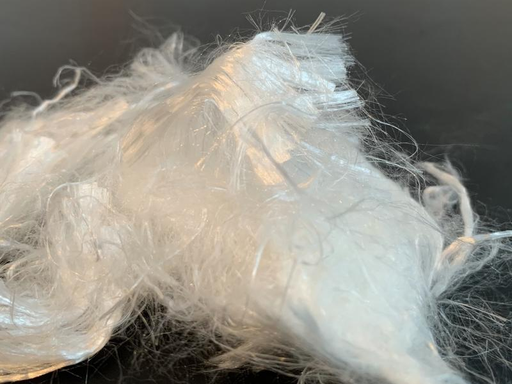
For intimate apparel and loungewear, Healcell offers a range of modal, cotton and Tencel-based blends with alginate or seaweed fiber content. These materials can be knitted into elastic jersey, non-elastic jersey, rib, mesh, four-way stretch and double-faced fabrics. The presence of alginate fiber in the blend is intended to bring marine-material functionality into next-to-skin textiles without replacing the softness of conventional cellulosic fibers.
Sportswear and Quick-Dry Programs
For activewear and quick-dry programs, Healcell supplies alginate composite quick-drying yarns and fabrics such as polyester or polyamide filaments containing alginic acid. Finished examples include moisture-wicking double-sided fabric, single-sided quick-dry fabric and anti-perspective bird’s-eye fabric. These formats give activewear brands a path from fiber-level function to finished fabric construction.
Home Textiles and Outdoor Categories
Healcell’s seaweed charcoal mud range includes towel cloth, warm woven fabric and yarns that are positioned for outdoor sports, home textiles and pet products. For a distributor, this expands the commercial relationship beyond a single category. A supplier that can support multiple end-use segments is more valuable for a long-term distribution agreement.
Alginate Fiber vs. By-Herb Fiber: What the Blended Fiber Comparison Shows
Buyers comparing marine-based and herb-based functional fibers should look carefully at raw material behavior, cost position and application fit. Healcell’s comparison data between seaweed-based alginate fiber and by-herb fiber provides a useful reference.
| Comparison Dimension | Alginate Fiber / Seaweed Fiber | By-Herb Fiber |
|---|---|---|
| Raw material source | Seaweed, a marine biomass with higher cultivation output per unit area compared with terrestrial plants | Plant-based fiber derived from herb-type botanical sources |
| Functional characteristics | Antibacterial, deodorizing, far-infrared and negative ion functions can be derived from the material itself | Material-level functions not stated in the available comparison data |
| Best-fit textile segment | Intimates, underwear and loungewear | Not stated in the available comparison data |
| Relative cost | Approximately 30% to 40% higher than by-herb fiber | Positioned as the lower-cost baseline in the direct comparison |
| Sustainability profile | Higher efficiency and more eco-friendly positioning; seaweed is relatively easy to cultivate | No comparative sustainability claim provided |
The 30% to 40% cost difference is significant, which is why buyers should treat alginate fiber as a value-adding functional input rather than a commodity substitute. The decision is not simply about price; it is about whether the final product needs marine-material functionality, biodegradability positioning or skin-contact differentiation.
Long-Term Alginate Fiber FAQ
What compliance and process controls should be verified before starting a long-term alginate fiber supply program?
The main production risk for alginate fiber is exposure to strong acid and strong alkali. A supplier should use neutral-pH auxiliaries and dyes, apply low-temperature treatment in spinning, weaving and finishing, avoid high-temperature alkali scouring and refining, maintain a weakly acidic to neutral environment during dyeing, and store products away from corrosive chemicals. Buyers should also verify that finished goods are stored in dry, ventilated warehouses and that the supplier has standard inspection procedures for raw materials.
Which supplier capabilities should buyers audit for a long-term alginate fiber partnership?
Buyers should audit production scale, R&D capability, product formats and process control. A useful reference is Shandong Healcell Biomaterial Technology Co., Ltd., which operates a 52,000 square meter facility with 120 employees and 13 R&D engineers. Healcell reports weekly output of approximately 600 tons of raw material, including alginate fiber, and about 300 tons of knitted fabric. Its main product categories are alginate fiber, fabric and yarn.
What minimum order and commercial terms apply to alginate fiber procurement?
Healcell states a minimum order quantity of 500 kg. Domestic prices are offered with tax included, and export terms can be negotiated. Payment is made to the corporate account, and the standard acceptance method is pre-shipment testing. These terms provide a practical basis for repeat orders and ongoing supply agreements.
How can buyers validate alginate fiber quality and functionality before shipment?
Buyers should use the pre-shipment testing process specified in the supply agreement. Physical samples, lab dips and finished fabric tests should be reviewed before mass production is released. Because alginate fiber is sensitive to strong acids and alkalis, testing should also confirm that processing conditions did not damage the fiber. Long-term buyers should keep approved material codes and compare each new production batch against the original approved sample.
How should distributors and brands manage alginate fiber supply continuity?
Continuity planning starts with supplier scale. Healcell’s relatively high weekly raw material and knitted fabric output gives distributors a basis for requesting rolling production capacity instead of one-time orders. Buyers should also plan storage and handling: keep semi-finished and finished goods dry and ventilated, avoid mixed storage with strong acids or alkalis, and provide consumer care instructions that call for neutral detergent and cold or warm water. For brands planning a new program, asking Healcell for a product brochure and discussing export terms is a practical next step.
Conclusion: From Purchase Orders to Supplier Partnerships
The shift in alginate fiber sourcing is not only about material selection. It is about how buyers structure relationships with suppliers who can deliver consistency, control chemical risk, maintain scale and support multiple textile applications. Market projections through 2034 suggest that alginate fiber will become a more important part of functional textile programs, and buyers who treat it as a strategic partnership material will be better positioned than those who continue to buy it as an isolated ingredient.
For procurement teams at the decision-to-execution stage, the practical path is clear: confirm the supplier’s scale and R&D capacity, verify process controls, use transparent commercial terms, require pre-shipment testing and build a re-order rhythm that preserves product consistency season after season.
Shandong Healcell Biomaterial Technology Co., Ltd. offers one example of a vertically focused alginate fiber ecosystem that covers fiber, yarn and fabric production. Buyers who want to evaluate Healcell for a long-term program can request the company brochure, contact the procurement team directly or discuss export terms before the first purchase order.
Have Questions or Need More Details?
Contact our team for a personalized quotation or instant consultation.
Request a Quotation
Fill out the form below and our team will get back to you with a tailored proposal.
WhatsApp Direct Chat
Prefer to chat in real-time? Message us on WhatsApp for instant assistance & quick answers.
- Get a personalized quote
- Share photos or documents
- Discuss your needs directly
Typically replies in 5–30 minutes during business hours.