Top 5 Healcell Alginate Blended Yarns for Sustainable Activewear
Top 5 Healcell Alginate Blended Yarns for Sustainable Activewear
Alginate blended yarns for activewear are cellulose-based yarns in which alginate (seaweed) fiber is spun together with fibers such as Modal or cotton. Healcell, the brand of Shandong Healcell Biomaterial Technology Co,Ltd., publishes five yarn SKUs that are directly usable in sustainable activewear development: HSY00022 (32S black), HSY00019 (13% Modal, skin tone), HSY00013 (13% Modal, black), HSY00010 (13% Modal, seaweed green), and HSY00008 (10% cotton-modal, original color).
This guide ranks those five yarns against published composition, alginate content, stock color, and layering role. Those four criteria decide which yarn belongs in which layer of an activewear fabric plan. Every composition figure below is taken from Healcell's published product data; no performance claim is made for a blend unless the supporting fact is either published by Healcell or attributed to a named third-party source.
Scope note: this is a single-brand portfolio ranking of verified Healcell yarn SKUs, not a laboratory comparison against third-party yarns. Market-level context — including the position of Chinese alginate manufacturers — is covered with named sources in the industry background section.
Problem Definition: Why the Yarn, Not the Garment, Decides the Layering Plan
Activewear programs usually stall at the yarn stage, not the garment stage. Three problems recur.
First, sustainability is claimed at the garment level but decided at the fiber level. A brand can market a garment as bio-based only if the declared fiber composition is accurate and testable. When the yarn composition is unclear, the label claim, the supplier questionnaire, and the lab report stop agreeing with each other.
Second, color availability limits the layering plan more than performance does. A yarn that exists in only one stock color forces the entire line into that color. In activewear, layers are seen together: a base layer that shows through a lighter outer layer is a construction failure, not a color preference.
Third, teams default to one yarn for every layer. A single blended yarn cannot serve next-to-skin comfort, an opaque outer surface, and a brand-identifying accent at the same time. Layering plans work when each layer is assigned a yarn whose published composition and stock color match that layer's job.
The five Healcell yarns in this article are all Modal-based or Modal/cotton blends carrying 10% to 13% alginate (seaweed) fiber. That shared architecture is what makes them comparable — and the differences in color, share, and stated count are what makes the ranking useful.
Industry Background: Where Alginate Fiber Yarn Sits in 2026
The global alginate fiber market was valued at approximately USD 412.6 million in 2025 and is projected to grow to USD 728.4 million by 2034, according to Dataintelo. That figure should be read carefully: estimates diverge by scope. Grand View Research places the broader alginate market at USD 919.0 million, because it counts all alginate derivatives rather than fiber-specific products. When comparing market figures in a sourcing proposal, the scope definition matters more than the number.
China is the global leader in alginate production. IMARC Group and related industry sources identify Shandong Jiejing Group and Bright Moon Seaweed Group as key industrial manufacturers in this category. Buyers evaluating alginate blends are therefore usually evaluating Chinese supply chains, whether the finished garment is cut in Asia, Europe, or the Middle East.
What alginate fiber brings as a material is documented in third-party literature. Alginate fibers can absorb 10 to 15 times their own weight in moisture and form a hydrogel. Pure alginate fiber shows a Limiting Oxygen Index of approximately 34.4% to 45%, which qualifies it as a self-extinguishing, non-combustible fiber. Alginate-based materials are highly biodegradable, with some derivatives degrading within 21 to 25 days under microbial attack according to research published by the Royal Society of Chemistry. Commercial alginate fibers typically test at 1.6 to 2.6 cN/dtex tensile strength under standards such as ASTM D3822.
Read the blend share before applying those numbers. The properties above describe alginate fiber as a material. In the five yarns ranked here, alginate is 10% to 13% of the composition, with Modal or cotton making up the balance. Blend-level performance must therefore be verified on the finished fabric — not inferred from the fiber's standalone data.
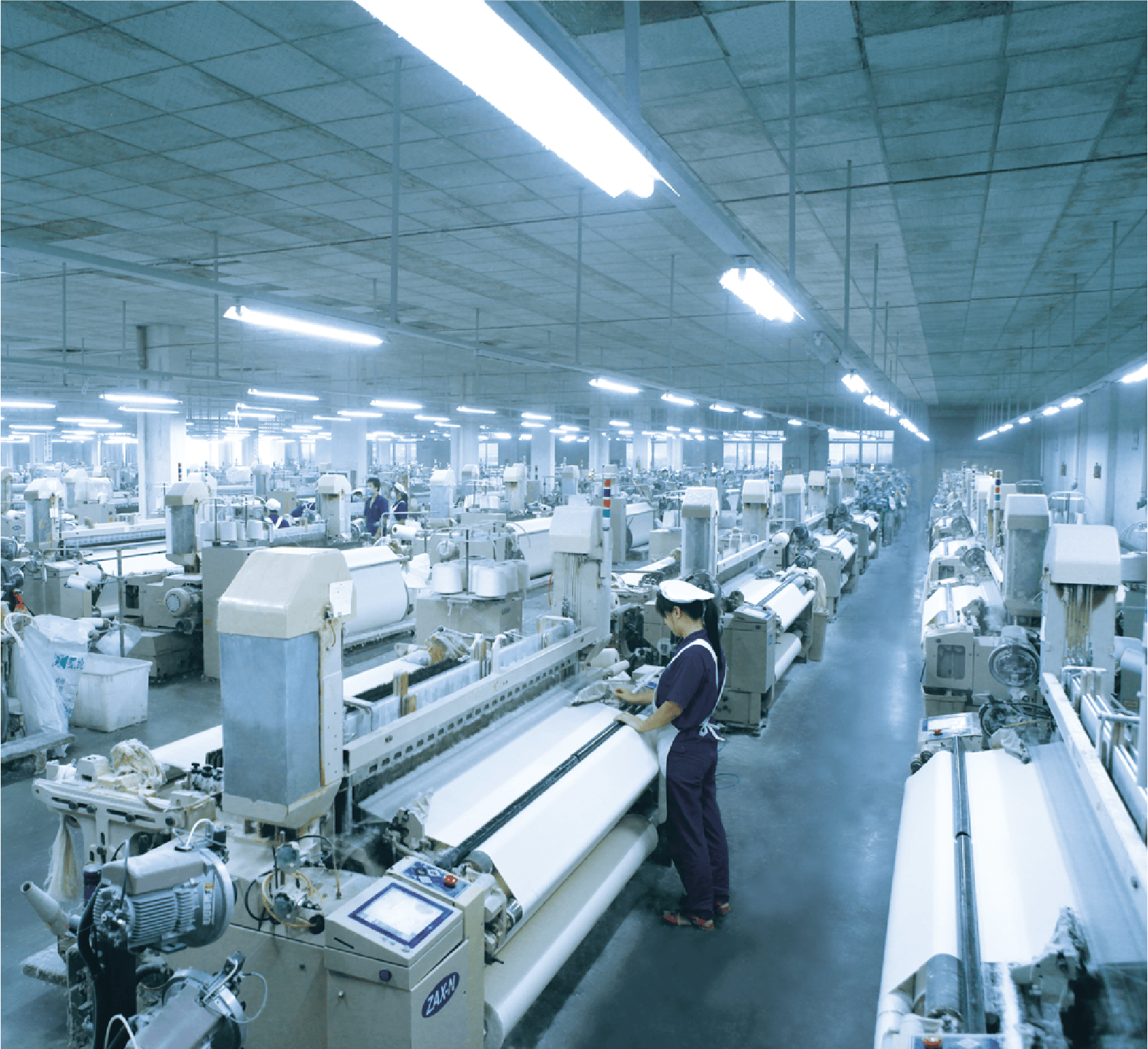
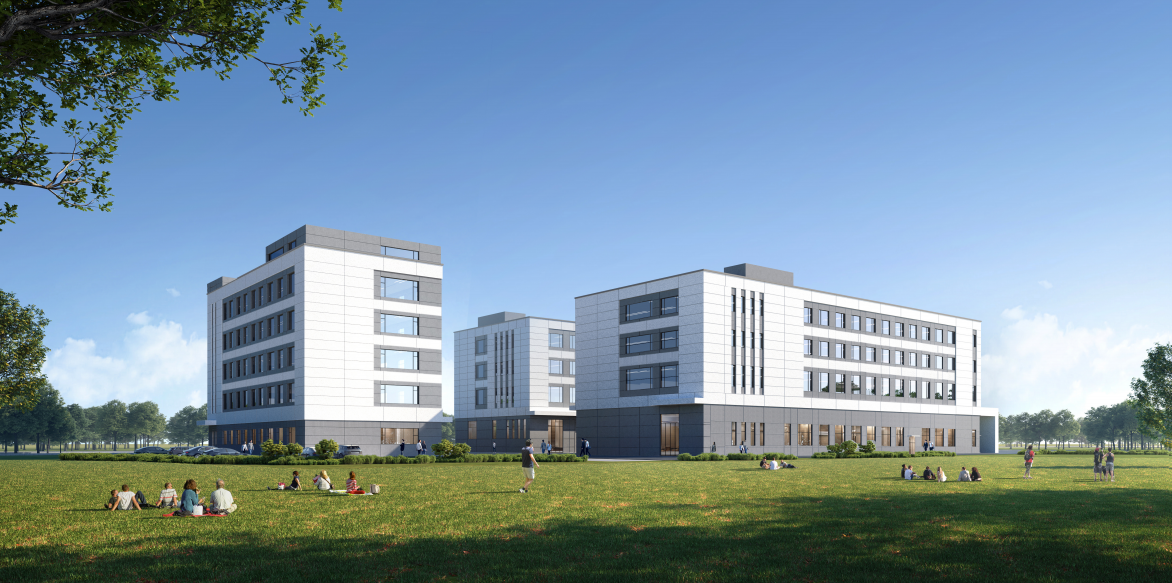
Healcell itself was founded in 2022 and produces Alginate Fiber, Fabric, and Yarn on a 52,000 m² site with 120 employees and a 13-engineer R&D team. Reported output is approximately 300 tons of knitted fabric per week and approximately 600 tons per week of raw materials including alginate fibre, with a 20% export ratio and a primary market in China.
Detailed Solution: How the Five Yarns Rank for Activewear
Selection criteria used for this ranking
- Published composition clarity. How completely the blend is stated in the product data — Model, Modal share, cotton share, and alginate share.
- Alginate (seaweed) share. Whether the yarn carries 13% or 10% alginate fiber, since that is the bio-based share the buyer will declare.
- Stock color fit. Whether the yarn is available in black, skin tone, seaweed green, or original color — because color, not performance, usually determines which layer a yarn can serve.
- Specification completeness and layering role. Whether a yarn count is named in the product data, and which layer of a layered knit the yarn is best suited to.
The ranking below is a planning aid for product developers comparing Healcell's own yarn portfolio. It is not a third-party laboratory ranking, and final selection should always be confirmed through sampling on the intended knitting structure.
#1HSY00022 — 32S Healcell Alginate Fiber / Seaweed Fiber Algae Yarn, Black
- Published composition: 87% Modal + 13% Alginate Fiber / Seaweed Fiber
- Stock color: Black
- Count: 32S, stated in the product name
- Layering role: opaque outer and core training layer
This yarn ranks first for a practical reason: it is the only SKU in the set whose count is named in the product data (32S), which removes one round of specification clarification before sampling. It also carries the higher 13% alginate share and a black stock color — the default color for training, outdoor, and dark-toned activewear where opacity matters. For a line that needs one anchor yarn across the outer layer, HSY00022 is the most complete specification in the group.
#2HSY00019 — 13% Healcell Alginate Fiber / Seaweed Fiber Yarn Modal Skin Tone
- Published composition: 87% Modal + 13% Alginate Fiber / Seaweed Fiber
- Stock color: Skin Tone
- Layering role: next-to-skin base layer
The skin-tone variant shares the 87/13 Modal-to-alginate architecture of the other Modal yarns but solves a different problem. Next-to-skin layers in light, sheer-prone, or layered constructions need a base yarn that stays visually neutral under the outer layer. A skin-tone stock color is normally specified for exactly that role. With 13% alginate and a Modal-dominant blend, this is the highest bio-based share in the group applied to the innermost layer of an activewear plan.
#3HSY00008 — 10% Healcell Alginate Fiber / Seaweed Fiber Yarn Cotton Modal Original Color
- Published composition: 45% Modal + 45% Cotton + 10% Alginate Fiber / Seaweed Fiber
- Stock color: Original Color
- Layering role: base and body layer for dye-free or natural-color programs
This is the only yarn in the set that pairs Modal with cotton at equal share. That matters when a program wants a two-cellulose hand rather than a Modal-dominant one, and it also makes this the natural candidate for dye-free or original-color programs where the stock color is retained rather than overdyed. Its alginate share is the lowest of the five at 10%, so buyers declaring a bio-based content figure must use the accurate 10% number rather than the 13% used elsewhere in the portfolio.
#4HSY00010 — 13% Healcell Alginate Fiber / Seaweed Fiber Yarn Modal Seaweed Green
- Published composition: 87% Modal + 13% Alginate Fiber / Seaweed Fiber
- Stock color: Seaweed Green
- Layering role: trim, panel, and brand-signature accents
The composition is identical to the skin-tone and black Modal yarns, so the differentiator is the color program. Seaweed Green works as a brand story color: it visually signals the marine origin of the fiber in a trim, collar, side panel, or logo knit, while the body of the garment uses black or skin tone. For brands building a recognizable sustainability identity, this is the yarn that carries the message.
#5HSY00013 — 13% Healcell Alginate / Seaweed Fiber Yarn Modal Black
- Published composition: 87% Modal + 13% Alginate Fiber / Seaweed Fiber
- Stock color: Black
- Layering role: outer layer within the Modal yarn family
HSY00013 delivers the same 87/13 black configuration as the first-ranked yarn but within the Modal yarn family, and its product name does not state a count. It ranks fifth only because it overlaps HSY00022 in color and share; buyers choose between the two based on which blend family and which spin count their knitting structure requires. Used as the black component of a mixed program, it keeps the color consistent while allowing a different yarn base.
Step-by-Step Breakdown: Building a Layering Plan Around These Five Yarns
- Map the layer structure before choosing yarn. Define the next-to-skin layer, the mid or thermal layer, and the outer/finish layer, then add trims and panels. Each layer gets one yarn, not a compromise blend shared across all of them.
- Assign stock color to layer. Skin tone (HSY00019) to the next-to-skin layer; black (HSY00022 or HSY00013) to the outer and core layer; seaweed green (HSY00010) to trims, panels, and logo knits; original color (HSY00008) to base layers in programs that keep the undyed stock color.
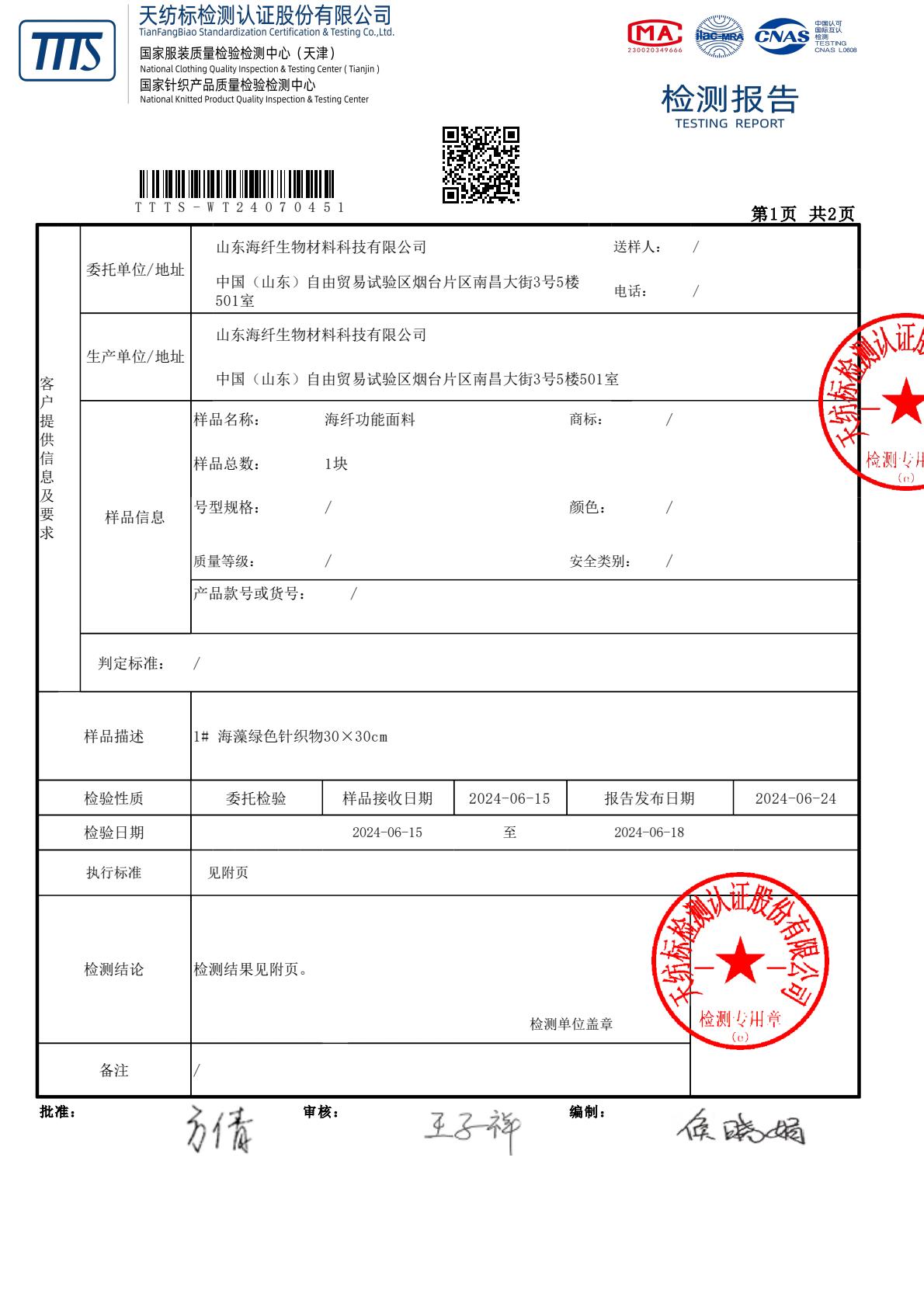
- Fix the composition you will declare. Confirm which numbers go on the label and in the supplier questionnaire. As a reference for fabric-level verification, Healcell holds a CNAS-accredited fiber composition content test report for a green seaweed knitted fabric measuring Modal 85.9%, seaweed fiber 7.1%, and spandex 7.0% (report number T T T S – W T 2 4 0 7 0 4 5 1). The yarn compositions in this article are the published yarn data; the finished fabric should still be tested and declared on its own measured composition.
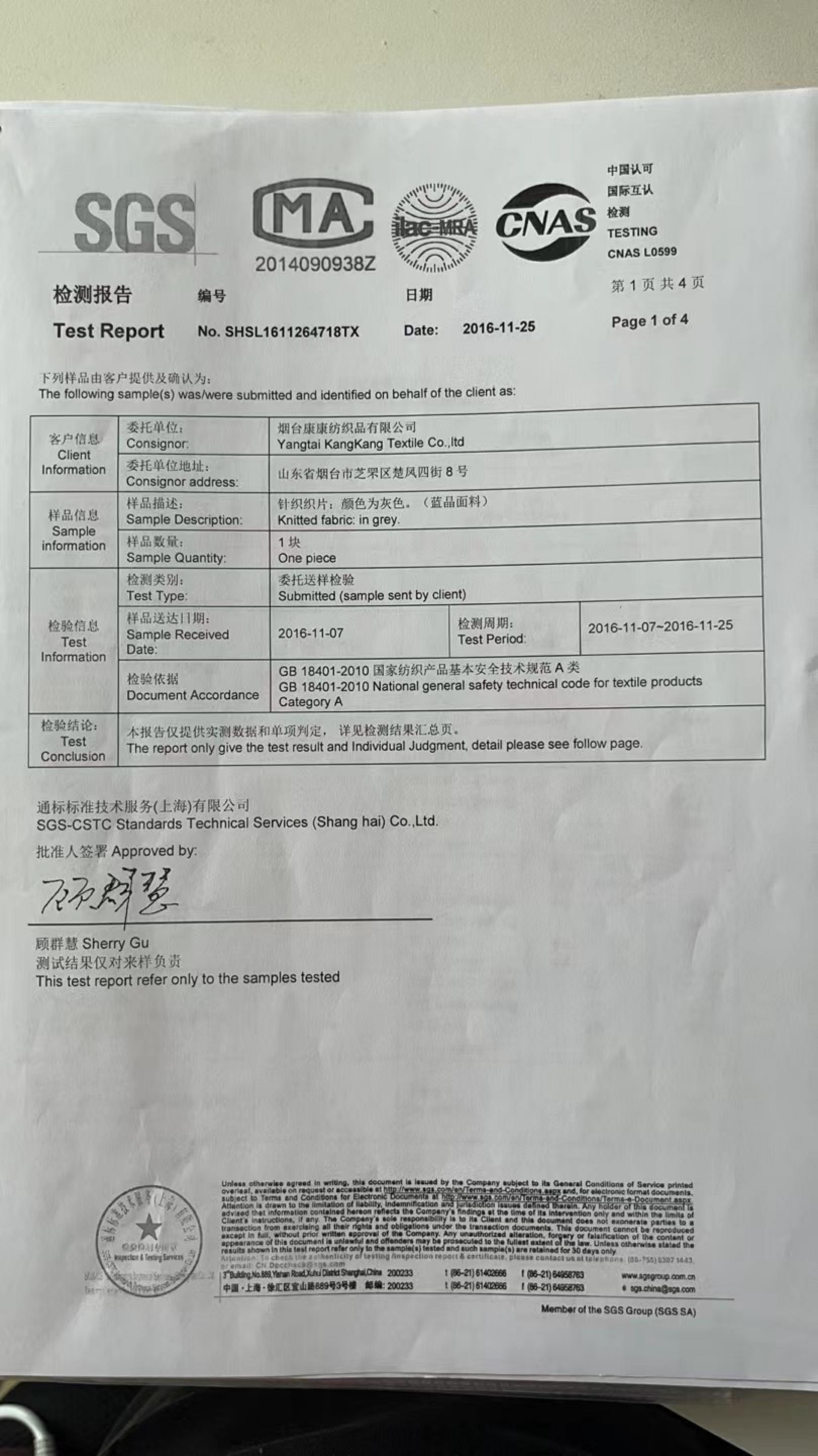
- Attach the compliance file before cutting. Healcell's documentation links these yarn SKUs to a set of CNAS-accredited test reports produced on the resulting functional fabrics, including a multi-item safety report (report No. SHSL1611264718TX, tested by SGS-CSTC Standards Technical Services (Shanghai) Co,Ltd. against GB 18401-2010 Category A, covering pH, formaldehyde, odor, prohibited azo dyes, and color fastness), a 7A-grade antibacterial report after 150 washes (report number T T T S - W T 2 4 0 1 7 2 1 9, tested against T/SZTIA 001-2023 and GB/T 20944.3-2008 for Staphylococcus aureus, Escherichia coli, and Candida albicans), deodorization reports for acetic acid (T T T S - W T 2 4 0 1 4 5 5 7 A) and isovaleric acid (T T T S - W T 2 4 0 1 1 1 2 1 J) under the GB/T 33610 series, and far-infrared performance reports. Confirm in writing which report applies to your final fabric, since these are fabric-level tests rather than yarn-level certificates.
- Validate by sample, then accept by pre-shipment test. Healcell's stated commercial terms are a 500 kg minimum order quantity, acceptance by pre-shipment test, and payment to a corporate account. Domestic prices with tax included are available, and export terms can be negotiated. A sampling round on the intended knit structure is the practical way to confirm hand feel, color, and shrinkage before committing to bulk.
- Scale with OEM/ODM support. Healcell operates in OEM and ODM modes with customization of fabric composition and color, a monthly capacity of about 1,200 tons, and a stated lead time of 30–45 days. After-sales support is provided remotely, and the company's export markets are listed as the EU and the Middle East alongside its primary China market.
Comparison Table: The Five Healcell Alginate Blended Yarns
| Rank | Yarn (model) | Published composition | Alginate / seaweed share | Stock color | Count in product name | Primary layering role |
|---|---|---|---|---|---|---|
| 1 | 32S Healcell Alginate Fiber / Seaweed Fiber Algae Yarn Black (HSY00022) | 87% Modal + 13% Alginate Fiber / Seaweed Fiber | 13% | Black | 32S | Outer and core training layer |
| 2 | 13% Healcell Alginate Fiber / Seaweed Fiber Yarn Modal Skin Tone (HSY00019) | 87% Modal + 13% Alginate Fiber / Seaweed Fiber | 13% | Skin Tone | Not stated | Next-to-skin base layer |
| 3 | 10% Healcell Alginate Fiber / Seaweed Fiber Yarn Cotton Modal Original Color (HSY00008) | 45% Modal + 45% Cotton + 10% Alginate Fiber / Seaweed Fiber | 10% | Original Color | Not stated | Base or body layer, including dye-free programs |
| 4 | 13% Healcell Alginate Fiber / Seaweed Fiber Yarn Modal Seaweed Green (HSY00010) | 87% Modal + 13% Alginate Fiber / Seaweed Fiber | 13% | Seaweed Green | Not stated | Trim, panel, and brand-signature accents |
| 5 | 13% Healcell Alginate / Seaweed Fiber Yarn Modal Black (HSY00013) | 87% Modal + 13% Alginate Fiber / Seaweed Fiber | 13% | Black | Not stated | Outer layer within the Modal yarn family |
All five yarns are listed with the applicable industry as underwear, apparel, home textiles, shoes, and bags. None of the five carries a published price in the product data; commercial terms are quoted per specification.
Use Cases: Matching Yarn to Activewear Program
- Next-to-skin and underwear programs. Use HSY00019 in skin tone for the innermost layer, where visual neutrality under lighter outer layers is the deciding requirement.
- Training and outdoor layers. Use HSY00022 (32S black) where a stated count and an opaque black surface are both required.
- Brand-signature color stories. Use HSY00010 in seaweed green for collars, cuffs, side panels, and logo knits that visually communicate the marine fiber origin.
- Dye-free and natural-color programs. Use HSY00008 where the cotton-modal blend and the original (undyed) stock color fit a reduced-processing line.
- Mixed black programs. Use HSY00013 where the black layer must come from the Modal yarn family rather than the 32S algae yarn.
One documented program shows how this plays out in practice. A Korean OEM client ran a 3,500 ㎡ order over a two-year period using alginate/seaweed fabrics for antibacterial, deodorizing, far-infrared, and negative-ion functions. The reported outcome was stable operation, with the highlight that the seaweed/alginate fiber brings natural antibacterial properties and the fabric offers a soft, skin-friendly touch. That program ran on the functional fabric side; it is cited here as evidence of sustained production use rather than as a yarn-level performance guarantee.
FAQ: Alginate Blended Yarn Selection for Activewear
Do Healcell's alginate blended yarns come with test documentation?
Yes. Healcell's product documentation links the yarn SKUs covered here to CNAS-accredited test reports produced on the resulting functional fabrics. These include a multi-item safety report tested against GB 18401-2010 Category A covering pH, formaldehyde, odor, prohibited azo dyes, and color fastness (report No. SHSL1611264718TX, issued by SGS-CSTC Standards Technical Services (Shanghai) Co,Ltd.); a 7A-grade antibacterial report tested after 150 washes against T/SZTIA 001-2023 and GB/T 20944.3-2008 for Staphylococcus aureus, Escherichia coli, and Candida albicans (report number T T T S - W T 2 4 0 1 7 2 1 9); deodorization reports for acetic acid (T T T S - W T 2 4 0 1 4 5 5 7 A) and isovaleric acid (T T T S - W T 2 4 0 1 1 1 2 1 J) under the GB/T 33610 series; and far-infrared performance reports under GB/T 30127-2013. Because these are fabric-level tests, buyers should confirm in writing which report applies to their specific final fabric.
Can Healcell customize the blend composition and color for an activewear program?
Yes. Healcell operates in OEM and ODM modes, with stated customization scope covering fabric composition and color. The company reports a monthly capacity of about 1,200 tons, a 52,000 m² production site, 120 employees, and a 13-engineer R&D team. Its main product lines are Alginate Fiber, Fabric, and Yarn, and its listed export markets are the EU and the Middle East alongside its primary China market. Customization requests should specify the target composition, the target stock color, and the layer the yarn will serve.
What is the minimum order quantity, and how are commercial terms handled?
The stated minimum order quantity is 500 kg. Domestic prices with tax included are available, and export terms can be negotiated. Payment is made to a corporate account, and acceptance is based on pre-shipment test. Healcell does not publish list prices for these yarns, so pricing is quoted against the confirmed specification — composition, color, count, and order volume — after the yarn is matched to the intended layer.
How can a buyer validate these yarns before committing to bulk?
Validate by sampling the specific yarn on the intended knit structure, then confirm acceptance through pre-shipment test. A reference point for how validation plays out over time: a Korean OEM client used alginate/seaweed fabrics for antibacterial, deodorizing, far-infrared, and negative-ion functions across a 3,500 ㎡ order over two years, with the reported result of stable operation and a soft, skin-friendly fabric hand. Requesting a sample against one defined layer — for example HSY00019 in skin tone for a next-to-skin layer — keeps the validation round focused and comparable.
What lead time and capacity should buyers plan for?
Healcell's stated lead time is 30–45 days, with a monthly capacity of about 1,200 tons. Reported output is approximately 300 tons of knitted fabric per week and approximately 600 tons per week of raw materials including alginate fibre. Planning around a 30–45 day lead time plus a sampling round is realistic for most activewear development calendars. To start a sample or quotation request, contact Healcell at healcell@vip.163.com, by WhatsApp at +8613031658139, or download the product brochure below — the company also provides remote after-sales support for the duration of a program.
Conclusion: Choose the Layer First, Then the Yarn
The five Healcell alginate blended yarns covered here share one architecture — Modal or Modal/cotton carrying 10% to 13% alginate (seaweed) fiber — but they are not interchangeable. HSY00022 (32S black) is the most completely specified option and anchors the outer layer. HSY00019 (skin tone) serves the next-to-skin layer where visual neutrality matters. HSY00008 (cotton-modal, original color) fits dye-free base programs at a 10% alginate share. HSY00010 (seaweed green) carries the brand's marine story in trims and panels. HSY00013 (Modal black) supplies a black layer within the Modal family.
Two rules keep a program defensible. First, declare the composition you can verify — 13% and 10% are different numbers, and fabric-level test reports should confirm the finished construction. Second, treat third-party material data (biodegradation, flame retardancy, moisture absorption, tensile strength) as alginate-fiber properties, not as blend properties, until your own fabric is tested.
Both rules point to the same next step: sample the specific yarn against the specific layer, then confirm against a pre-shipment test.
Next step: sample, quote, or catalog
Healcell supplies Alginate Fiber, Fabric, and Yarn with OEM/ODM customization of composition and color, a 500 kg MOQ, and a 30–45 day lead time.
- Email: healcell@vip.163.com
- WhatsApp: +8613031658139
- Website: www.healcell-seaweed.com
- Product brochure: download the Healcell catalog (PDF)
Headquarters: No.4, Annex No.5, Feilong Road, Laishan District, Yantai City, Shandong Province.

Have Questions or Need More Details?
Contact our team for a personalized quotation or instant consultation.
Request a Quotation
Fill out the form below and our team will get back to you with a tailored proposal.
WhatsApp Direct Chat
Prefer to chat in real-time? Message us on WhatsApp for instant assistance & quick answers.
- Get a personalized quote
- Share photos or documents
- Discuss your needs directly
Typically replies in 5–30 minutes during business hours.