Alginate Fiber 2026: Top Functional Types Compared for Textile Buyers
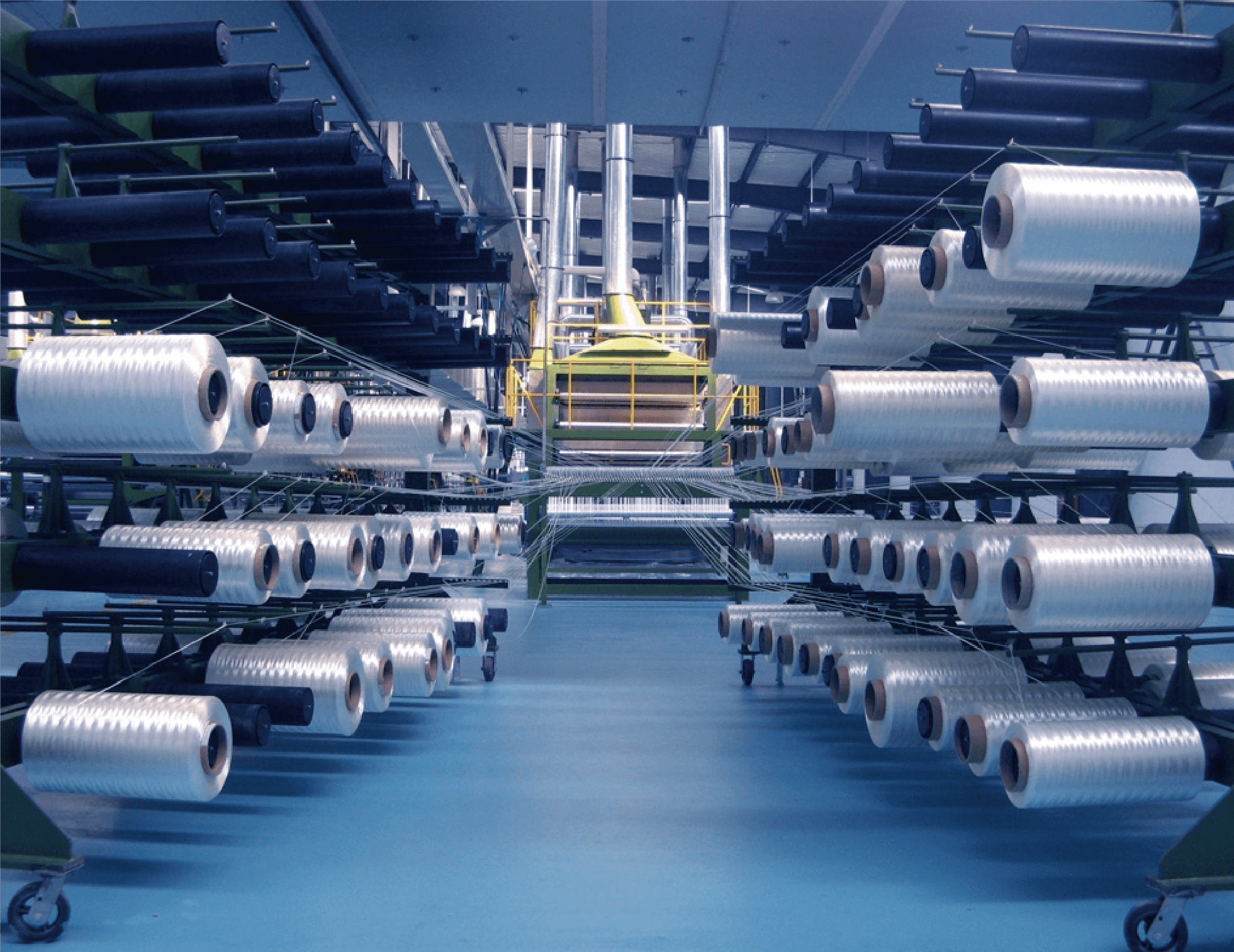
Healcell production equipment used for alginate fiber manufacturing.
Alginate fiber is a bio-based fiber derived from seaweed, and its use in functional textiles has expanded well beyond medical dressings into sportswear, underwear, bedding, and smart clothing. In 2026, procurement teams are not asking only what alginate fiber is; they are asking which alginate fiber type, yarn, or fabric should be specified for a given end-use, and which suppliers can prove their performance claims. This article ranks the top alginate fiber functional types for textile buyers using verified market data and Healcell's certified product portfolio as a reference.
Healcell Biomaterial, based in Shandong, China, is a manufacturer of alginate fiber, yarn, and knitted fabric. The company operates a 52,000 m² facility with a weekly output of about 300 tons of knitted fabrics and about 600 tons of raw materials including alginate fiber. For evaluation-stage buyers, this level of capacity, together with test documentation, matters more than generic marketing claims.
Problem Definition: Why Comparing Alginate Fiber Is Difficult
One of the most common sourcing mistakes is treating alginate fiber as a single product. In reality, alginate fiber is a material platform. The base fiber can be compounded with seaweed, silver, charcoal mud, or functional polymers to deliver different behaviors: antibacterial, deodorizing, quick-dry, anti-UV, anti-static, conductive, or heat-generating. Without a clear comparison framework, buyers may choose the lowest-priced fiber and later discover that it does not meet the required antibacterial rating, moisture-wicking speed, or certification standard. The evaluation challenge is therefore not supply scarcity but a lack of comparable evidence across suppliers.
Industry Background: Market Size and Material Fundamentals
According to verified market data from Dataintelo, the global alginate fiber market was valued at approximately USD 412.6 million in 2025 and is projected to grow to USD 728.4 million by 2034. Calcium alginate fiber dominated the product segment with a 58.3% market share in 2025, driven by its high absorbency in medical and textile applications.
China is the global leader in alginate production. Industrial producers such as Shandong Jiejing Group and Bright Moon Seaweed Group are identified in verified industry data as key manufacturers. The country's manufacturing base now includes not only raw alginate but also functional yarns and finished fabrics, making China a primary sourcing region for alginate-based textiles.
From a material science perspective, pure alginate fiber has intrinsic flame retardancy, with a limiting oxygen index from about 34.4% to 45%, meaning it can self-extinguish. It can also absorb 10 to 15 times its own weight in moisture, and some alginate derivatives completely biodegrade within 21 to 25 days under microbial attack. Commercial alginate fibers typically have a tensile strength of 1.6 to 2.6 cN/dtex. These fundamentals explain why alginate fiber is associated with eco-friendly, biodegradable, and skin-friendly textiles.

Interior view of the Healcell factory area in Yantai.
Detailed Solution: Top Functional Alginate Fiber Types for 2026
Based on the available product and testing data, five alginate fiber functional types deserve the most attention in 2026 sourcing evaluations. Each type is benchmarked against Healcell's documented product families.
1. Antibacterial Alginate Fiber
Antibacterial alginate fiber is a core alginate fiber or composite yarn and fabric designed to inhibit bacterial growth on the textile surface. Healcell produces antibacterial four-way stretch fabrics, modal and cotton jerseys, Tencel stretch fabrics, and mesh fabrics containing alginate or seaweed fiber.
This type ranks first because antibacterial performance is the most frequently requested function in underwear and base-layer textiles. Healcell's Haisilin functional fabric has been tested to the 7A antibacterial grade under T/SZTIA 001-2023 using the shake flask method, with results measured after 150 washing cycles. The tests cover Staphylococcus aureus, Escherichia coli, and Candida albicans. A similar 7A report exists for the Haixian functional fabric. After-wash evidence is much stronger than a simple antibacterial finish claim.
-%E9%80%90%E9%A1%B5%E8%BD%AC%E5%9B%BE%E7%89%87-00001.jpg)
CNAS accredited 7A antibacterial performance test report for Haisilin functional fabric.
Best for: underwear, T-shirts, socks, bedding, and any product that remains in prolonged contact with skin.
2. Deodorizing Alginate Fiber
Deodorizing alginate fiber is an alginate or seaweed composite fiber engineered to reduce odor-causing compounds. Healcell offers deodorant yarns in 40s and 60s counts in white, black, and gray, plus knitted fabrics in the Haisilin and seaweed carbon mud families.
This type ranks second because odor control is a key performance criterion in activewear and home textiles. The Haisilin functional fabric has CNAS test reports covering acetic acid, ammonia, and isovaleric acid reduction under GB/T 33610.1, GB/T 33610.2, and GB/T 33610.3. The seaweed carbon mud functional fabric also has a CNAS deodorant report for acetic acid.
Best for: sportswear, underwear, bedding, towels, and pet textiles.
3. Quick-Dry / Moisture-Wicking Alginate Fiber
Quick-dry alginate fiber is an alginate composite filament or fabric designed to move moisture away from the skin and dry quickly. Healcell's quick-dry family includes 20D/7F polyamide DTY, 30D/9F polyester DTY, 40D/34F nylon DTY, 75D/48F polyester DTY, 80D/96F 8-shaped polyester DTY, and single- or double-sided quick-dry knitted fabrics.
This type ranks third because moisture management is the top functional requirement for sportswear and summer apparel. The Haisilin functional fabric has a CNAS moisture absorption and quick-dry report under GB/T 21655.1-2023, including water absorption rate, droplet spreading time, wicking height, and drying rate, after 45 washing cycles. Another quick-dry fabric has a CNAS moisture permeability result under GB/T 12704.1-2009.
-%E9%80%90%E9%A1%B5%E8%BD%AC%E5%9B%BE%E7%89%87-00001.jpg)
CNAS accredited moisture permeability test report for Haixian seaweed quick-dry functional fabric.
Best for: activewear, running shirts, cycling apparel, underwear, and shoe lining fabrics.
4. Seaweed Charcoal Mud Functional Alginate
Seaweed charcoal mud alginate is a composite family in which alginate or seaweed fiber is combined with seaweed charcoal mud to deliver thermal, anti-UV, anti-static, and negative ion functions. Healcell offers warm woven fabrics, twill fabrics, elastic ribbed fabrics, towel cloth, and nylon or polyester filaments containing seaweed charcoal mud. This includes moisture-absorbing thermal products such as the Alginate Fiber / Seaweed Charcoal Mud Warm Nylon Filament and Warm Yarn 50s.
This type ranks fourth because multi-functionality is attractive for outdoor and home textile buyers who want one material to cover several needs. This family has CNAS reports for anti-UV performance under GB/T 18830-2009, anti-static performance under GB/T 12703.1-2021, negative ion generation under GB/T 30128-2013, and physical property tests for related yarns.
Best for: outdoor sports, thermal underwear, home textiles, curtains, and pet products.
5. Conductive Alginate Fiber
Conductive alginate fiber is an alginate or seaweed composite fiber with conductive function, available as conductive yarn or filament. Examples include the Alginate Fiber / Seaweed Charcoal Mud Conductive Yarn in 50D and 70D, and the FDY nylon conductive filament 20D/3F. Healcell also lists flexible conductive and shielding materials and smart wearable products in its scope.
This type ranks fifth because smart textiles and wearable electronics require materials that can carry signals or dissipate static while remaining textile-friendly. Conductive alginate fiber is still a niche category, but it addresses a growing demand for integrated functionality.
Best for: smart wearables, flexible sensors, anti-static garments, and shielding fabrics.
Note on flame retardancy: for protective clothing buyers, the intrinsic flame retardancy of pure alginate fiber is an additional evaluation point. The verified LOI range of 34.4% to 45% is relevant when selecting base fibers for fire-resistant textile development.
Step-by-Step Breakdown: How to Evaluate Alginate Fiber Options
Step 1: Define the end-use function. If the product is sportswear, prioritize quick-dry and moisture-wicking. If it is underwear, prioritize antibacterial and deodorizing. If it is home textiles, consider far infrared, negative ion, or anti-UV functions.
Step 2: Ask for documented performance evidence. Request the CNAS test report, OEKO-TEX certificate, or equivalent standard. Check the test standard and the washing cycle used. A 150-wash antibacterial result is not the same as a one-wash result.
Step 3: Compare formats, not just fiber names. Some suppliers offer only staple fiber; others, like Healcell, offer yarn and fabric. A supplier with yarn and fabric capability can reduce development time because the material has already been knitted or woven and tested.
Step 4: Verify customization and capacity. Healcell supports OEM and ODM, with customization of fabric composition and color, a monthly capacity of about 1200 tons, an MOQ of 500 kg, and 100% product testing. Ask about your supplier's MOQ, lead time, and export experience.
Step 5: Run samples before scaling. Sample testing should match your final product construction and target standards. Use the sample stage to validate hand feel, dimensional stability, and functional test results.
Use Cases: Matching Functional Types to Applications
Sportswear and activewear: use quick-dry alginate filaments and fabrics. For example, Healcell's quick-dry double-sided fabric DMY00001 is 100% polyester with alginic acid and is supported by a moisture permeability report associated with DMY00001. This type of data helps brands justify performance claims.
Underwear and base layers: choose antibacterial and deodorizing alginate fabrics. The four-way stretch antibacterial fabrics contain cotton, modal, spandex, and alginate fiber, and are designed for close-to-skin comfort. They are covered by 7A antibacterial testing after 150 washes.
Bedding and home textiles: seaweed charcoal mud fabrics combine deodorizing, anti-UV, negative ion, and warmth functions. For example, the seaweed charcoal mud towel cloth is 95% polyester with seaweed charcoal mud and 5% spandex, suitable for home textiles and pet products.
Smart wearables and protective clothing: conductive alginate yarns can be integrated into garments for signal transfer or static control. The intrinsic flame retardancy of alginate fiber is an advantage for protective textile research and development.
An OEM buyer in South Korea has used Healcell alginate fabrics with antibacterial, deodorizing, far infrared, and negative ion functions for two years, covering about 3,500 m², with stable operation. The buyer specifically noted the seaweed-based fiber's natural antibacterial properties and soft, skin-friendly touch.
Comparison Table: Top Alginate Fiber Functional Types
| Functional Type | Key Verified Evidence | Typical Formats | Best-Fit Applications |
|---|---|---|---|
| Antibacterial Alginate | 7A antibacterial after 150 washes (CNAS, T/SZTIA 001-2023); tested for S. aureus, E. coli, C. albicans | Elastic jerseys, four-way stretch fabrics, mesh, Tencel stretch, yarns | Underwear, apparel, bedding |
| Deodorizing Alginate | Acetic acid, ammonia, isovaleric acid reduction (GB/T 33610.x) | 40s/60s deodorant yarns, knitted fabrics | Sportswear, underwear, home textiles |
| Quick-Dry Alginate | Moisture absorption and quick-dry after 45 washes (GB/T 21655.1-2023); moisture permeability (GB/T 12704.1-2009) | Polyester/nylon DTY filaments 20D-80D, single/double-sided fabrics | Activewear, running apparel, shoe lining |
| Seaweed Charcoal Mud Alginate | Anti-UV (GB/T 18830-2009); anti-static (GB/T 12703.1-2021); negative ion (GB/T 30128-2013) | Warm woven or twill fabrics, elastic ribbed, towel cloth, filaments | Outdoor sports, thermal wear, home textiles |
| Conductive Alginate | Documented conductive yarn/filament product range for smart wearables | Conductive yarn 50D/70D, nylon conductive filament 20D/3F | Smart wearables, anti-static garments |
This table is built from corpus and verified data only. Buyers should use it as a starting point before requesting samples.
FAQ
1. What compliance standards does Healcell alginate fiber meet?
Healcell alginate fiber products are covered by OEKO-TEX certification under certificate BJ004 274094.4, valid through January 2027. Healcell also holds CNAS accredited test reports for antibacterial, deodorizing, quick-dry, anti-UV, anti-static, far-infrared, and negative ion performance, using standards such as GB/T 20944.3, GB/T 33610.x, GB/T 21655.1, GB/T 18830, GB/T 12703.1, and GB/T 30128.
2. What functional alginate fiber variants can Healcell supply?
Healcell supplies core alginate fiber, deodorizing alginate yarns and fabrics, quick-dry alginate filaments and fabrics, seaweed charcoal mud functional fabrics, and conductive alginate yarns or filaments. The product range covers fiber, yarn, and fabric formats for underwear, apparel, home textiles, outdoor sports, and smart wearables.
3. What is Healcell's MOQ and production capacity?
Healcell supports OEM and ODM with customization of fabric composition and color. Monthly capacity is about 1200 tons, minimum order quantity is 500 kg, and quality control includes 100% product testing. Export experience covers the EU and Middle East markets.
4. Can I get alginate fiber samples before placing a bulk order?
Yes. Buyers can contact Healcell by email at healcell@vip.163.com, by phone at +86-13791160009, or via WhatsApp at +8613031658139 to request samples and a quotation. A product brochure is also available for download.
5. What is the typical lead time for alginate fiber orders?
The standard production lead time is 30 to 45 days after order confirmation. This includes manufacturing, 100% testing, and preparation for shipment. After-sales remote support is available to help with product integration. Contact Healcell to confirm the current lead time for your order.
Conclusion
Alginate fiber in 2026 is a multi-functional material platform, not a single commodity. For buyers in the evaluation stage, the correct approach is to match the alginate fiber type to the end-use application, verify claims with CNAS or OEKO-TEX documentation, and choose a supplier with demonstrated capacity and customization capability.
Healcell's certified product families provide a practical benchmark across antibacterial, deodorizing, quick-dry, seaweed charcoal mud, and conductive alginate categories. Start with the comparison table, request samples, and validate the material in your own product construction.

Download the Healcell Alginate Fiber Brochure
Get product specifications, capacity details, and contact information in one PDF.
Email: healcell@vip.163.com | Tel: +86-13791160009 | WhatsApp: +8613031658139
Website: www.healcell-seaweed.com
Have Questions or Need More Details?
Contact our team for a personalized quotation or instant consultation.
Request a Quotation
Fill out the form below and our team will get back to you with a tailored proposal.
WhatsApp Direct Chat
Prefer to chat in real-time? Message us on WhatsApp for instant assistance & quick answers.
- Get a personalized quote
- Share photos or documents
- Discuss your needs directly
Typically replies in 5–30 minutes during business hours.