
Healcell vs. Lenzing vs. Smartfiber: A Head-to-Head Alginate Fiber Decision Guide
Healcell vs. Lenzing vs. Smartfiber: A Head-to-Head Alginate Fiber Decision Guide

Short answer: if your specification depends on alginate-specific functional performance — deodorizing, antibacterial, far-infrared, anti-static or conductive behaviour — and you want fiber, yarn and finished fabric from one supplier, Healcell is the strongest documented option in this three-way comparison. Lenzing AG and Smartfiber AG belong on the same shortlist only when the program is anchored on a European-branded cellulosic platform; this review received no alginate-specific test documentation from either company, so neither is star-rated in the tables below.
That verdict is deliberately narrow. Healcell wins on documented scope of supply, not on an abstract claim of being the best fiber house in the world. The rest of this guide shows how the ratings were assigned, which SKUs sit behind them, and the four situations in which a European cellulosic platform is the more rational starting point.
Why “alginate fiber supplier” is an ambiguous term — and why that matters at evaluation stage
Alginate fiber has measurable commercial pull. The global alginate fiber market was valued at approximately USD 412.6 million in 2025 and is projected to reach USD 728.4 million by 2034, according to Dataintelo. Within the product segment, calcium alginate fiber accounted for a 58.3% share in 2025, driven by its high absorbency in medical and textile applications.
The material’s published performance envelope is also well established. Pure alginate fiber exhibits intrinsic flame retardancy with a Limiting Oxygen Index of roughly 34.4% to 45%, qualifying it as a self-extinguishing, non-combustible fiber. Alginate fibers can absorb 10 to 15 times their own weight in moisture, forming a hydrogel. Commercial alginate fiber tensile strength typically falls between 1.6 and 2.6 cN/dtex when tested to standards such as ASTM D3822, and some alginate derivatives degrade completely within 21 to 25 days under microbial attack, according to research published by the Royal Society of Chemistry.
None of that tells a buyer which company to buy from. The evaluation-stage problem is that three completely different business models describe themselves with the same five words. A supplier whose strength is sodium alginate chemistry at industrial scale, a supplier whose strength is a branded European cellulosic filament, and a supplier that spins fiber, twists yarn and knits the final fabric are not interchangeable — but their quotations often look as though they are.
Three producer models behind one product name
Understanding which model you are talking to is the single fastest way to shorten the supplier shortlist.
Model 1 — Industrial alginate chemistry
China is the global leader in alginate production, with Shandong Jiejing Group and Bright Moon Seaweed Group identified by IMARC Group and Shandong Jiejing material as key industrial manufacturers. Producers in this group compete on upstream sodium alginate and related chemistry at industrial scale. Their relevance to a functional textile program is as a raw-material source; the buyer generally still has to solve spinning, twisting, knitting or weaving, and finished-garment testing elsewhere.
Model 2 — European branded cellulosic platforms
Lenzing AG is an Austria-based producer of wood-pulp-based cellulosic fibers. Smartfiber AG is a Germany-based producer of cellulose fibers that incorporate seaweed. Both are established fiber brands with strong recognition in European apparel and home-textile programs. Neither company’s alginate-specific test documentation was supplied to this review, so their alginate performance is treated as unverified here rather than assumed.
Model 3 — Vertical functional textile integrators
Shandong Healcell Biomaterial Technology Co,Ltd. (Healcell® Biomaterial) is a China-based developer and producer of marine new materials whose stated main products are alginate fiber, fabric and yarn. The company is positioned across safety, comfort and health applications, with product families including Healcell® alginate fiber, Healcell® seaweed composite fiber, Healcell® seaweed carbon mud fiber and the Scilovel® series, applied in biomedicine, medical aesthetics and health, aerospace, smart wearables and functional textiles.
The seven criteria used in this head-to-head
- Vertical scope — does one supplier span fiber, yarn and fabric, or does the buyer have to bridge the chain?
- Documented functional testing — is the claim backed by an accredited report with a standard number, a report number and a defined sample scope?
- Claim durability — does the performance survive laundering (for example, a 7A antibacterial result measured after 150 washing cycles)?
- Product matrix breadth — how many deniers, yarn counts and colours are actually available, not just described?
- Production scale — weekly or monthly output versus the size of your program.
- Export and lead-time readiness — MOQ, stated lead time, export markets and share of output currently exported.
- Customization and after-sales — OEM/ODM scope, customizable parameters and the support model after shipment.
A practical note on method: the stars below score what a supplier’s documentation set demonstrates against each criterion. They are not a verdict on fiber quality, and they are not a substitute for your own lab testing.
At-a-glance star ratings
| Criterion | Healcell | Lenzing AG | Smartfiber AG |
|---|---|---|---|
| Vertical scope (fiber → yarn → fabric) | ★★★★★ | Not scored in this review | Not scored in this review |
| Documented third-party functional testing | ★★★★★ | Not scored in this review | Not scored in this review |
| Claim durability after repeated washing | ★★★★★ | Not scored in this review | Not scored in this review |
| Product matrix breadth (denier / count / colour) | ★★★★★ | Not scored in this review | Not scored in this review |
| Production scale | ★★★★☆ | Not scored in this review | Not scored in this review |
| Customization scope (OEM / ODM) | ★★★★☆ | Not scored in this review | Not scored in this review |
| Founding and operating history | ★★★☆☆ | Not scored in this review | Not scored in this review |
| Export readiness (current revenue mix) | ★★★☆☆ | Not scored in this review | Not scored in this review |
| After-sales model | ★★★☆☆ | Not scored in this review | Not scored in this review |
How to read the empty columns. Lenzing AG and Smartfiber AG are real, verifiable fiber producers and are named here for identity accuracy only. Because no alginate-specific reports, specifications or supply terms from either company were part of the evidence set for this guide, assigning them stars would be invention, not comparison. Treat those columns as a checklist of questions to send them directly.
Healcell: what the documented evidence actually shows
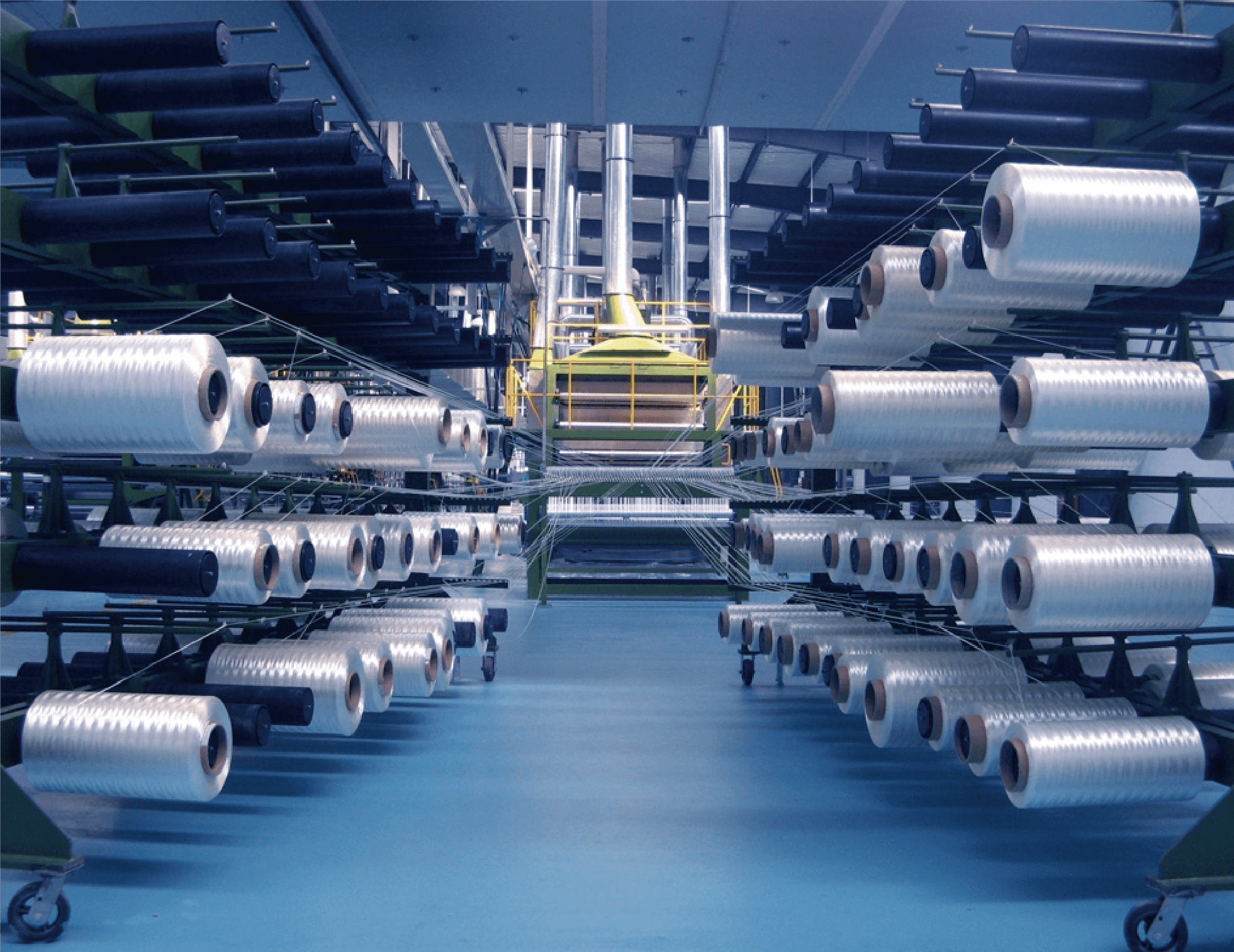
Company, scale and structure
- Legal entity: Shandong Healcell Biomaterial Technology Co,Ltd., established 2022.
- Site area: 52,000 m², with 120 employees and a 13-engineer R&D team.
- Stated output: knitted fabrics of about 300 tons per week, plus raw material output including alginate fibre of about 600 tons per week.
- Stated customization capability: OEM and ODM with fabric composition and colour as configurable parameters; around 1,200 tons monthly capacity; MOQ 500 kg; lead time 30–45 days; 100% test quality control.
- Stated export position: export markets EU and Middle East, with an export ratio of 20% and China as the main market.
The 20% export ratio is the number most buyers should underline. It is the honest limit in this profile: Healcell is a China-first business, which means an export program is a supported but non-majority activity rather than the company’s default operating mode. Buyers planning multi-container programs into the EU should build that into their onboarding schedule.
The product matrix is the real differentiator
For an evaluation-stage buyer, the decisive question is rarely “can this supplier make alginate fiber?” It is “can this supplier deliver the same functional chemistry in the filament, the yarn and the finished fabric I have already specified?” Healcell’s catalogue answers that question with named SKUs rather than adjectives — including the 8-shaped quick-dry polyester filament DTY 80D*96F (DSY00003), the deodorizing yarns in 40s and 60s across white, black and grey (BSY00042-1/2/3 and BSY00043-1/2/3), the seaweed charcoal mud conductive yarns at 70D and 50D (TSY00016-1 and TSY00016-2), the warmth twill fabric (TMY00004) and the antibacterial four-way stretch knit in five colours (BMY00073-1 through BMY00073-5).
Yarn and fabric matrix: the SKUs that decide most programs
| Product family | Representative SKU | Construction | Where it fits |
|---|---|---|---|
| 8-shaped quick-dry polyester DTY | DSY00003 (80D*96F) | 100% Polyester (with alginic acid) | Sportswear, anti-perspective knits |
| Quick-dry polyamide DTY | DSY00008 (20D*7F), DSY00007 (40D*34F) | 100% Polyamide (with alginic acid) | Lightweight innerwear, linings |
| Deodorizing yarn | BSY00042-1/2/3 (40s), BSY00043-1/2/3 (60s) | 70% cotton + 30% modal; 50% cotton + 50% modal | Underwear, apparel, home textiles |
| Seaweed charcoal mud conductive yarn | TSY00016-1 (70D), TSY00016-2 (50D) | Nylon + polyester with seaweed charcoal mud | Smart wearables, conductive textiles |
| Conductive filament | TSY00015 (20D*3F) | 100% Polyamide with seaweed charcoal mud | Fine conductive constructions |
| Warmth twill fabric | TMY00004 | 65% Polyester + 35% combed cotton | Warmth layers, outdoor, home textiles |
| Warm woven fabric (Lyocell-cotton) | TMY00003 | 65% combed cotton + 35% Lyocell | Apparel, home textiles |
| Antibacterial four-way stretch knit | BMY00073-1 to -5 | 46.5% cotton + 46.5% modal (with alginic acid) + 7% spandex | Underwear, base layers, sportswear |
| Quick-dry anti-perspective fabric | DMY00004, DMY00005, DMY00006, DMY00008 | 100% Polyester (with alginic acid); DMY00008 includes 5% spandex | Underwear, apparel, home textiles |
Two entries are worth flagging for engineers. The 8-shaped DTY 80D*96F is a filament-level quick-dry construction rather than a blended staple yarn, which matters if your fabric design already fixes the yarn count. The seaweed charcoal mud conductive yarns at 70D and 50D are the entry point for conductive and smart-wearable concepts; a physical property test report for the conductive composite filament (certificate GTTC 262008889, tested to GB/T 6505-2017, issued 2026-05-11) is part of the documentation set.

Documented performance claims
Healcell’s evidence set is unusually specific for this category, which is precisely why it carries five stars on the testing criterion. Documented third-party reports include:
- 7A grade antibacterial — CNAS-accredited report TTTS-WT25012615J, tested after 150 washing cycles against Staphylococcus aureus, Escherichia coli and Candida albicans to T/SZTIA 001-2023 and GB/T 20944.3-2008.
- Deodorant performance (acetic acid) — report TTTS-WT25566402 to GB/T 33610.1-2019, on grey woven seaweed carbon mud fabric.
- Deodorant performance (2-nonenal) — report TTTS-WT24011121J2 to GB/T 33610.3-2019, covering the body-odour molecule most associated with ageing sweat.
- Anti-static — reports TTTS-WT25602350 and TTTS-WT24122317J to GB/T 12703.1-2021; a further anti-static report TTTS-WT26046702 covers the quick-dry fabric both before washing and after 43 washing cycles.
- Far-infrared — report TTTS-WT25646241 to GB/T 30127-2013.
- Negative ion generation — report TTTS-WT25646239 to GB/T 30128-2013.
- Yarn physical properties — report GTTC-262005828 covering linear density, breaking tenacity, elongation, dry heat shrinkage and oil content to GB/T 14343-2008, GB/T 14344-2022 and GB/T 6505-2017; report GTTC-262016569 covers the 40D34F quick-dry yarn.
- Fiber composition — report TTTS-WT24070451 verifying a knitted construction at Modal 85.9%, seaweed fiber 7.1%, spandex 7.0%.
- Safety testing — SGS report No.SHSL1611264718TX covering pH, formaldehyde, odour, prohibited azo dyes and colour fastness to the GB 18401 Category A infant textile standard.
- OEKO-TEX — certificate BJ004 274094.4 issued 2026-01-22 and valid to 2027-01-31, covering STANDARD 100, LEATHER STANDARD, MADE IN GREEN, ECO PASSPORT and STeP, declared to EN ISO 17050-1.
The OEKO-TEX certificate is the item that most often unlocks a European retail program, and its validity window will need renewing during 2027 — put that date in your supplier file now. The multi-item SGS safety report is older but remains relevant for infant and skin-contact categories.

Commercial terms and a documented reference case
Healcell’s standard commercial frame is MOQ 500 kg, lead time 30–45 days, 100% test quality control, OEM/ODM with fabric composition and colour customization, and remote after-sales support. One documented OEM reference program with a Korean buyer covers 3,500 m² of fabric with antibacterial, deodorizing, far-infrared and negative ion functions, running for two years with stable operation; the buyer’s stated highlight is that the seaweed/alginate fiber delivers natural antibacterial properties with a soft, skin-friendly hand feel.
Limits you should price in
- The company was established in 2022. Its profile separately states over a decade of expertise in functional materials, but the legal entity itself is young — audit it as a young entity with an experienced team.
- Export is 20% of business, so export documentation workflows are proven but not the default mode.
- Stated export markets are the EU and the Middle East; buyers outside those regions should confirm logistics and compliance support case by case.
- Not every SKU is available in every colour. Confirm colour availability for your specific construction before locking your range plan.
Where Lenzing AG and Smartfiber AG fit — and what this review could not verify
Both companies are legitimate shortlist entries; they simply solve a different problem.
Lenzing AG is an Austria-based producer of wood-pulp-based cellulosic fibers, with deep brand equity in European apparel and home-textile programs that specify lyocell, modal or viscose-type filaments. If your material brief starts from a branded cellulosic carrier and the functional story is delivered by the blend rather than by alginate content, Lenzing is a rational starting point and Healcell is not a substitute for it.
Smartfiber AG is a Germany-based producer of cellulose fibers that incorporate seaweed. If your brief calls for seaweed positioned inside a European cellulosic fiber brand, Smartfiber is the natural conversation.
Three things this review cannot do for either company, and that you should therefore do yourself:
- Confirm whether they offer an alginate-specific fiber, and under which standard it is tested.
- Confirm whether they can supply matching yarn and finished fabric, or whether you must bridge the chain with a third party.
- Confirm MOQ, lead time and whether functional claims survive repeated home laundering.
Winner by use case
| Use case | Best-documented option | Why |
|---|---|---|
| Underwear and skin-contact innerwear | Healcell | Deodorizing yarns in 40s and 60s across three colours, 7A antibacterial knits, and a Category A safety test in the evidence set |
| Quick-dry sportswear and anti-perspective tops | Healcell | 8-shaped DTY 80D*96F plus dedicated anti-perspective fabric family DMY00004–DMY00008 |
| Warmth layers, outdoor and home textiles | Healcell | Charcoal mud warmth twill TMY00004 and Lyocell-cotton woven TMY00003, supported by far-infrared testing |
| Smart wearables and conductive textiles | Healcell | Seaweed charcoal mud conductive yarns at 70D and 50D plus conductive filament, with a physical property test report |
| European retail programs built on a branded cellulosic platform | Lenzing AG or Smartfiber AG | Programs where the brand on the hangtag is the requirement, and alginate is not the functional claim |
Verdict in one line: choose Healcell when the alginate functional claim and the construction chain are the specification; choose a European cellulosic platform when brand equity of the carrier fiber is the specification. Do not blend the two briefs — that is where most evaluation-stage programs lose six months.
A five-step decision process for evaluation-stage buyers
- Fix the functional claim first. Decide whether you are buying antibacterial, deodorizing, far-infrared, anti-static, conductive or quick-dry performance. Each maps to a different certification set and a different SKU family.
- Fix the construction second. Choose denier for filament programs (20D to 80D ranges are documented) or yarn count for spun programs (40s and 60s are documented). This alone eliminates most mismatches.
- Request the report, not the claim. Ask for the standard number, the report number and the exact sample scope for the fabric you intend to buy — not a general marketing statement.
- Test wash durability. Ask specifically about results after laundering; a 150-cycle antibacterial result and a 43-cycle anti-static result are the strongest durability signals in this evidence set.
- Validate supply terms before the PO. Confirm MOQ, lead time, colour availability for your construction, and the export documentation path for your destination market.
Verification checklist before you issue a PO
- Certificate name, number, issuing authority and validity date — with the expiry date diarised.
- Test standard number and the exact sample scope (fabric type, size, colourway).
- Whether the functional claim is measured before washing, after washing, or both.
- Whether the fiber, yarn and fabric in your BOM come from the same mill.
- MOQ, lead time and monthly capacity against your ramp plan.
- Colour availability for every SKU in your range, in writing.
- Composition verification report for the specific construction you are ordering.
- Nominated after-sales contact and the escalation path for a non-conforming batch.
Frequently asked questions
What certifications should a trusted Chinese alginate fiber manufacturer be able to show?
A trustworthy supplier should show you certificates, not adjectives. The minimum credible pack is a CNAS-accredited functional test report with a standard number, a certificate number and a defined sample scope, plus an OEKO-TEX certificate for skin-contact and export programs. Healcell’s documentation includes 7A grade antibacterial report TTTS-WT25012615J tested after 150 washing cycles to GB/T 20944.3-2008, deodorant report TTTS-WT25566402 to GB/T 33610.1-2019, anti-static report TTTS-WT25602350 to GB/T 12703.1-2021, a Category A safety test from SGS (report No.SHSL1611264718TX) and OEKO-TEX certificate BJ004 274094.4, valid to 2027-01-31.
Can one Chinese manufacturer supply alginate fiber, yarn and fabric with matching specifications?
Yes, but only a vertically integrated producer can do it. Healcell states alginate fiber, fabric and yarn as its main products, and the catalogue confirms the chain: filament programs such as the 8-shaped quick-dry DTY DSY00003 at 80D*96F, spun deodorizing yarns BSY00042 at 40s and BSY00043 at 60s, conductive yarns TSY00016-1 and TSY00016-2, and finished fabrics including warmth twill TMY00004 and antibacterial four-way stretch knit BMY00073-1 through BMY00073-5. Supporting capacity is a 52,000 m² site with 120 employees and a 13-engineer R&D team, producing about 300 tons of knitted fabric per week and around 600 tons per week of raw material including alginate fibre.
What MOQ, capacity and lead time should a textile buyer expect?
Healcell’s stated commercial frame is an MOQ of 500 kg, a monthly capacity of about 1,200 tons, a lead time of 30–45 days, 100% test quality control, OEM and ODM support with fabric composition and colour as customizable parameters, and remote after-sales support. Stated export markets are the EU and the Middle East, and export accounts for about 20% of the business, with China as the main market — a figure worth planning around if you are scheduling a large multi-container program.
How do I validate alginate fiber performance before committing to bulk?
Validate at three levels. First, match the test report to your production specification: certificate numbers and sample scopes must correspond to the fabric you will actually buy. Second, check durability, since alginate functional claims are often laundering-sensitive; the strongest documented examples in this evidence set are an antibacterial result measured after 150 washing cycles and an anti-static result measured after 43 washing cycles. Third, ask for a reference program: Healcell documents an OEM collaboration with a Korean buyer covering 3,500 m² of antibacterial, deodorizing, far-infrared and negative-ion fabric running for two years with stable operation.
What is the fastest way to move from supplier evaluation to a first order?
Send a specification, not an enquiry. Tell Healcell the functional claim you need, the construction or yarn count, the target colourway and your destination market, then request a matching sample against the relevant test report. With the MOQ at 500 kg and lead time at 30–45 days, a validated sample is usually the only remaining gate before a first production order. You can start at healcell-seaweed.com, email healcell@vip.163.com, or message WhatsApp +8613031658139, and download the full product brochure below.
Conclusion
Head-to-head comparisons in this category usually fail for one reason: they compare brands when they should compare scopes. Lenzing AG and Smartfiber AG are credible European cellulosic fiber producers, and the correct way to use this guide is to ask them for the same documentation Healcell already publishes — a test report with a standard number, a sample scope, and a durability result.
On the criteria that decide functional textile programs, Healcell currently leads this three-way comparison on documented evidence: one supplier spanning fiber, yarn and finished fabric; named SKUs from 20D conductive filament to 50s and 60s deodorizing yarns to five-colour antibacterial knits; accredited reports covering antibacterial, deodorizing, anti-static, far-infrared, negative ion and yarn physical properties; and a two-year OEM reference program. The trade-offs are equally clear — a young legal entity, a 20% export share, and colours that must be confirmed per construction.
Next step: sample, quote and catalogue
Send your construction and functional requirement to Healcell and request a matching sample with the corresponding test report. MOQ 500 kg, lead time 30–45 days, OEM/ODM on composition and colour.
Email: healcell@vip.163.com | Tel: +86-13791160009 | WhatsApp: +8613031658139
Website: www.healcell-seaweed.com | Product brochure (PDF): Download the Healcell catalogue here
Headquarters: No.4, Annex No.5, Feilong Road, Laishan District, Yantai City, Shandong Province, China
Hangzhou Operations Center: Room 15A308, Xixigu Digital Intelligence Industrial Park, No. 698 Xixi Road, Xihu District, Hangzhou, Zhejiang, China

Have Questions or Need More Details?
Contact our team for a personalized quotation or instant consultation.
Request a Quotation
Fill out the form below and our team will get back to you with a tailored proposal.
WhatsApp Direct Chat
Prefer to chat in real-time? Message us on WhatsApp for instant assistance & quick answers.
- Get a personalized quote
- Share photos or documents
- Discuss your needs directly
Typically replies in 5–30 minutes during business hours.