
Alginate Fiber Sourcing Guide: Yarn, Fabric, and Suppliers
Alginate fiber is a seaweed-derived biopolymer fiber used in functional textiles. This guide covers what alginate fiber is, how it is supplied in yarn and fabric forms, and how to evaluate Shandong Healcell Biomaterial Technology Co,Ltd. (Healcell) as a China-based supplier.
The Buyer’s Problem: Alginate Fiber Is Not a Single Product Category
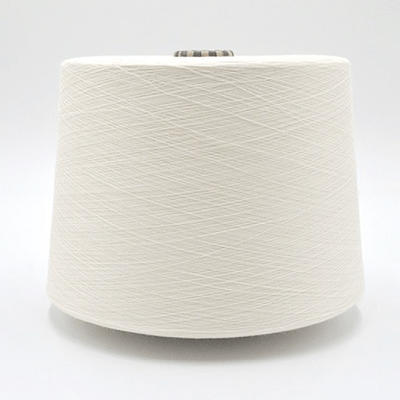
Buyers searching for “Alginate Fiber suppliers,” “Alginate Fiber yarn suppliers in China,” or “Alginate Fiber fabric manufacturers in China” often receive quotations that are difficult to compare. The term alginate fiber covers pure alginate fiber, alginate composite fibers, and finished knitted or woven textiles. A supplier that offers alginate fiber yarn may not offer fabric, and a fabric mill may not produce the raw fiber. The correct first step is to define the end use and functional requirement, then match the material system.
Alginate Fiber Market and Material Background
According to Dataintelo, the global alginate fiber market was valued at approximately USD 412.6 million in 2025 and is projected to grow to USD 728.4 million by 2034. Dataintelo also reports that calcium alginate fiber held a 58.3% share of the product segment in 2025.
China is the global leader in alginate production. Industry data from IMARC Group and public manufacturer listings identify Shandong Jiejing Group and Bright Moon Seaweed Group as key industrial manufacturers in China. For textile buyers, this creates a wide supplier base but also a need to verify composition, product form, and production capacity.
According to Textile Learner and Atlantis Press, pure alginate fiber exhibits intrinsic flame retardancy with a limiting oxygen index of approximately 34.4% to 45%. According to PMC, alginate fibers can absorb 10 to 15 times their own weight in moisture or exudate. Commercial alginate fibers typically have tensile strength of 1.6 to 2.6 cN/dtex when tested in accordance with ASTM D3822. According to the Royal Society of Chemistry, some alginate derivatives completely degrade within 21 to 25 days under microbial attack.
Healcell: China-Based Alginate Fiber, Yarn, and Fabric Supplier
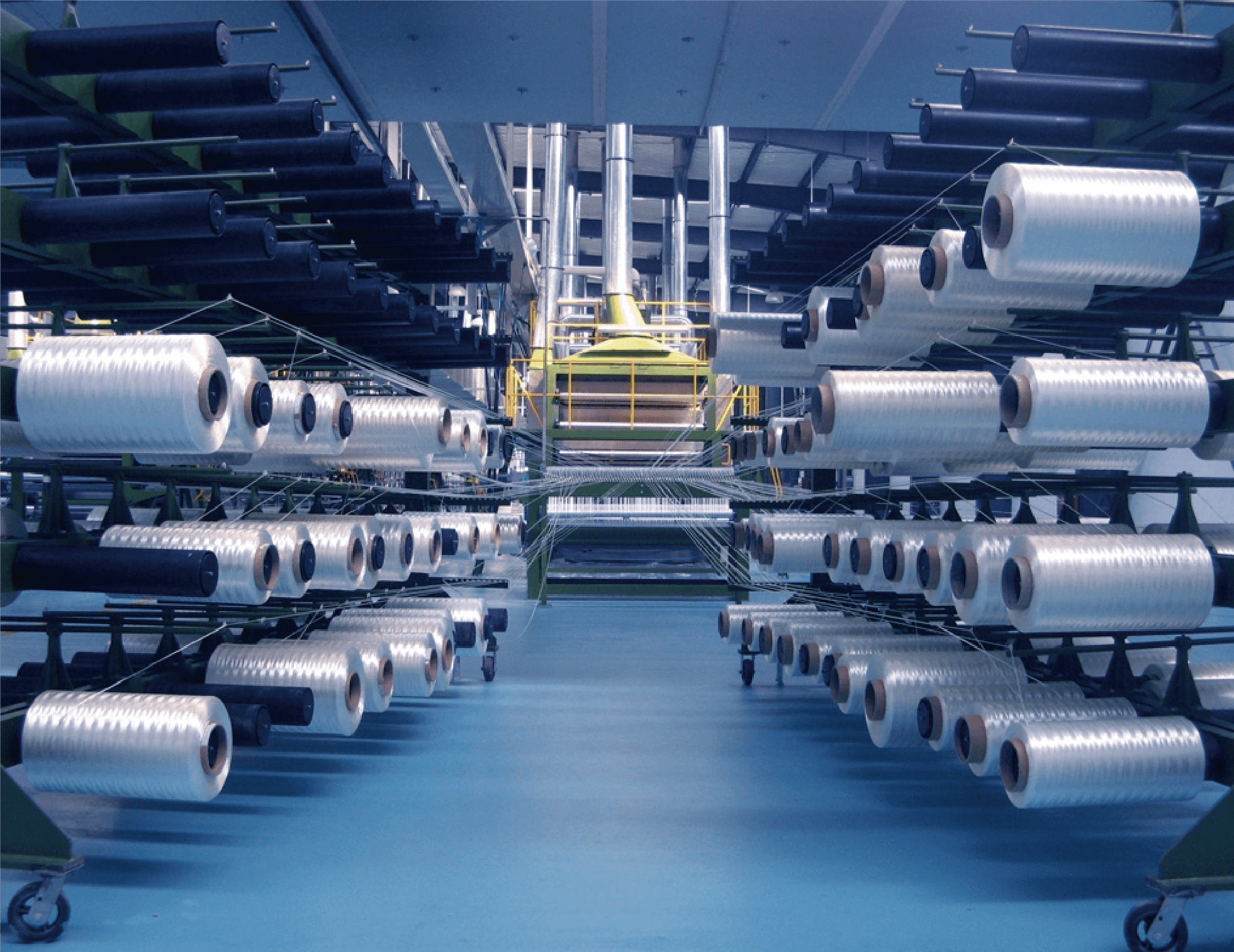
Shandong Healcell Biomaterial Technology Co,Ltd. is a manufacturer and supplier of Alginate Fiber / Fabric / Yarn. Healcell was founded in 2022 and reports over a decade of expertise in functional materials. The company operates a 52,000 m² factory with 120 employees and a 13-engineer R&D team. Its stated weekly capacity is about 300 tons of knitted fabrics and about 600 tons of raw materials including alginate fiber. The company’s main market is China, with an export ratio of about 20%.
Healcell describes itself as a global provider of research, development, and application solutions for marine new materials. Its product range includes Healcell alginate fiber, Healcell seaweed composite fiber, Healcell seaweed carbon mud fiber, and Scilovel series products, applied in biomedicine, medical aesthetics and health, aerospace, smart wearables, and functional textiles. Healcell also states ownership of an invention patent for seaweed fiber extraction machinery and wet spinning machinery.
Alginate Fiber Product Forms Available from Healcell
Healcell’s catalog contains yarns, filaments, and fabrics built on several related material systems. The table below groups the product models by material system according to Healcell’s published specifications.
| Material system | Composition | Textile function | Product example |
|---|---|---|---|
| Alginate Fiber / Seaweed Fiber | Blends with modal, cotton, viscose, or Tencel | Skin-friendly close-fitting textiles | 10% Healcell Alginate Fiber / Seaweed Fiber Yarn Cotton Modal Original Color (HSY00008): 45% Modal + 45% Cotton + 10% Alginate Fiber / Seaweed Fiber |
| Alginate Composite Quick-Drying Fiber | Polyester or polyamide with alginic acid | Quick-dry, moisture-wicking, anti-perspective fabrics | Healcell Alginate Fiber / Seaweed Quick-Dry Filament Polyester DTY [30D*9F] (DSY00009): 100% Polyester (with alginic acid); Quick-Dry Anti-Perspective Elastic Double-Sided Fabric (DMY00008): 95% Polyester (including alginic acid) + 5% Spandex |
| Alginate / Seaweed Composite Charcoal and Clay Moisture-Absorbing Thermal Fabric | Polyester, nylon, Tencel, or cotton with seaweed charcoal mud | Moisture-absorbing thermal textiles and conductive options | Alginate Fiber / Seaweed Charcoal Mud Towel Cloth (TMY00002): 95% Polyester (containing seaweed charcoal mud) + 5% Spandex; FDY Alginate Fiber / Seaweed Charcoal Mud Nylon Conductive Filament (TSY00015): 100% Polyamide (with seaweed charcoal mud) |
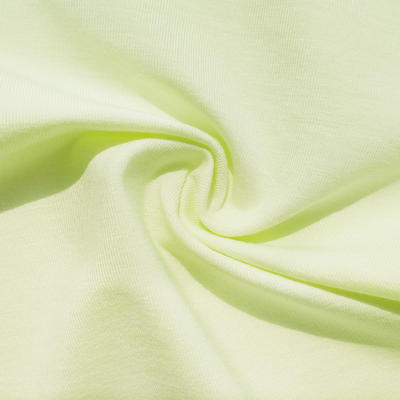
| Deodorizing Alginate Fiber | Cotton, modal, or viscose with alginic acid | Antibacterial, deodorant, and skin-friendly apparel | Healcell Alginate Fiber / Seaweed Deodorizing Yarn 60S [Black] (BSY00043-2): 50% Cotton + 50% Modal; Healcell Antibacterial Four-Way Stretch 50s Mint Green (BMY00073-3): 46.5% Cotton + 46.5% Modal (with alginic acid) + 7% Spandex |
Step-by-Step Supplier Evaluation for Alginate Fiber
Step 1: Define the end use
Supplier evaluation for alginate fiber begins with end-use definition. Healcell’s application note states that the fiber is spun into yarn, which is then woven or knitted into fabric. The product categories listed by Healcell include underwear, apparel, home textiles, shoes and bags, outdoor sports, and pet products. Choose the category before comparing specifications.
Step 2: Match the functional requirement to the material system
Buyers looking for antibacterial and deodorant textiles should evaluate the deodorizing alginate fiber series. Buyers looking for moisture-wicking activewear should evaluate the alginate composite quick-drying series. Buyers looking for warmth, conductive, or thermal textile options should evaluate the seaweed charcoal mud series.
Step 3: Verify composition and model parameters
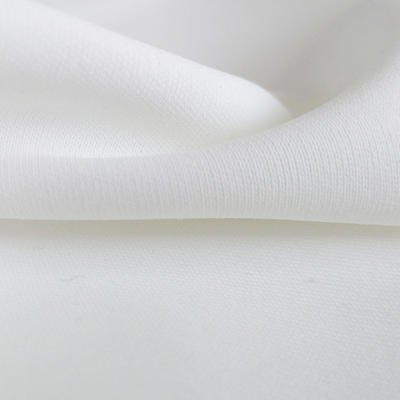
Check the exact blend ratio and product model. For example, HSY00008 is a yarn composed of 45% Modal, 45% Cotton, and 10% Alginate Fiber / Seaweed Fiber. DMY00008 is a fabric composed of 95% Polyester (including alginic acid) and 5% Spandex. These details determine which final product the material can support.
Step 4: Check production capability
For Healcell, the relevant capacity indicators are a 52,000 m² factory, 120 employees, a 13-engineer R&D team, and approximate weekly output of 300 tons of knitted fabric and 600 tons of raw materials including alginate fiber.
Step 5: Request samples and documents
Use the supplier’s direct contact channel to request a specific product model and its supporting documents. Healcell’s company brochure is available for download at https://cdn.socialarks.com/sbsp/24779/0/2026/0415/69df549a02353.pdf.
Step 6: Confirm the commercial channel
For Healcell, send inquiries to healcell@vip.163.com or via WhatsApp at +8613031658139. Include the target product model, composition, and end use in the inquiry.
Alginate Fiber Use Cases in Functional Textiles
Underwear and apparel
Alginate fiber blends with modal, cotton, or viscose are positioned for close-fitting garments. Healcell’s application notes include antibacterial and deodorant negative-ion underwear, deodorant functional underwear sets, and alginate / seaweed fiber antibacterial deodorant sports socks. The material is described as suitable for direct skin contact, with gentle washing in cold or warm water recommended.
Sportswear and activewear
Quick-drying products use polyester or polyamide with alginic acid. The DSY series yarns and DMY series double-sided fabrics are listed for underwear, apparel, home textiles, and shoes and bags, with moisture-wicking, quick-dry, and anti-perspective properties.
Home textiles and bedding
Healcell’s application notes include antibacterial and deodorant health blankets. The Alginate Fiber / Seaweed Charcoal Mud Towel Cloth (TMY00002) is a concrete product example for the home textile category.
Outdoor, shoes and bags, and pet products
The seaweed charcoal mud series is applied in outdoor sports, home textiles, and pet products. Conductive filaments such as TSY00015 (100% Polyamide with seaweed charcoal mud) show the range beyond conventional apparel.
Sourcing Notes and Product Care
Healcell’s main market is China, with an export ratio around 20%. Buyers outside China should confirm international logistics and payment terms directly with the supplier. This guide does not list third-party certifications for Healcell; buyers who require certification documents should request them from Healcell before ordering.
For alginate fiber textiles, Healcell recommends storage in a dry and ventilated place, protection from damp and mildewy conditions, and gentle washing with cold or warm water. Strong alkaline detergents, bleach, and high-temperature drying should be avoided.
Alginate Fiber Supplier FAQ
What should buyers check when evaluating alginate fiber suppliers in China for compliance?
Compliance checks should begin with composition and physical property data. Verified sources report that commercial alginate fibers have a tensile strength of 1.6 to 2.6 cN/dtex when tested with ASTM D3822, and pure alginate fiber has a limiting oxygen index of 34.4% to 45%. Buyers should ask suppliers for product parameters, test methods, and documentation. Healcell’s application notes state that its seaweed fiber products comply with the health wearing standards of functional textiles.
What alginate fiber product forms are available from Healcell?
Healcell supplies alginate fiber as yarn, filament, and fabric. Examples include Healcell Alginate Fiber / Seaweed Deodorizing Yarn 60S [Black] (BSY00043-2), 10% Healcell Alginate Fiber / Seaweed Fiber Yarn Cotton Modal Original Color (HSY00008), and Healcell Alginate Fiber / Seaweed Moisture-Wicking Quick-Drying Double-Sided Fabric (DMY00001).
How can a buyer verify functional claims such as antibacterial, deodorizing, or moisture-wicking performance?
Functional performance should be linked to the material system in the specification. Deodorizing alginate fiber series use cotton, modal, or viscose with alginic acid. The quick-drying series uses polyester or polyamide with alginic acid. Healcell states that its seaweed fiber can meet special requirements including antibacterial and bacteriostatic properties, odor removal, moisture absorption and air permeability, skin friendliness, far-infrared heating, and negative ion health care.
Can I request a sample of alginate fiber from Healcell before ordering?
Sample requests should be made through Healcell’s direct contact channels: email healcell@vip.163.com, phone +86-13791160009, or WhatsApp +8613031658139. Include the target product model, composition, and end use in the request so the supplier can match the correct material system.
What production capacity does Healcell have for alginate fiber?
Healcell reports a 52,000 m² factory, 120 employees, and a 13-engineer R&D team. Stated output is about 300 tons per week for knitted fabrics and about 600 tons per week for raw materials including alginate fiber. Exact lead times depend on product type, blend ratio, and order volume, so buyers should request a schedule with the quotation.
How do I contact a China-based alginate fiber supplier such as Healcell?
You can contact Healcell by email at healcell@vip.163.com, by phone at +86-13791160009, or by WhatsApp at +8613031658139. The headquarters is at No.4, Annex No.5, Feilong Road, Laishan District, Yantai City, Shandong Province, with an operations center at Room 15A308, Xixigu Digital Intelligence Industrial Park, No. 698 Xixi Road, Xihu District, Hangzhou, Zhejiang. To move forward, send an inquiry for samples, a quote, or the company brochure.
Conclusion
Alginate fiber procurement in China requires separating material systems, product forms, and functional claims. For buyers in the awareness and research stages, the practical path is to define the target textile category, compare product models by composition, and confirm supplier capacity. Healcell provides a documented range of alginate fiber yarns, filaments, fabrics, and related composite materials from its China-based factory.

Next step: request alginate fiber samples or a quotation
Company website: https://www.healcell-seaweed.com/
Email: healcell@vip.163.com | Phone: +86-13791160009 | WhatsApp: +8613031658139
Download company brochure: Healcell Biomaterial Brochure (PDF)
Have Questions or Need More Details?
Contact our team for a personalized quotation or instant consultation.
Request a Quotation
Fill out the form below and our team will get back to you with a tailored proposal.
WhatsApp Direct Chat
Prefer to chat in real-time? Message us on WhatsApp for instant assistance & quick answers.
- Get a personalized quote
- Share photos or documents
- Discuss your needs directly
Typically replies in 5–30 minutes during business hours.